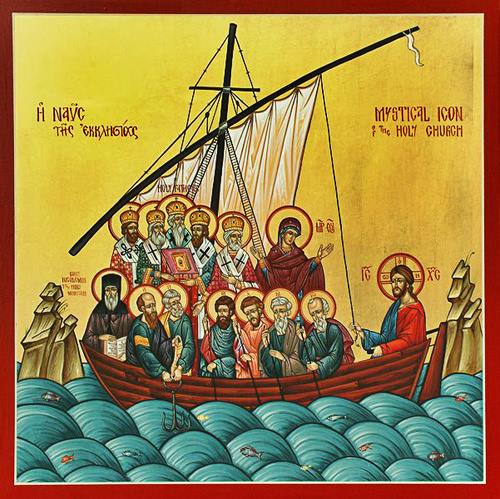

A Meeting Place for Evangelicals, Reformed, and Orthodox Christians

Category: Church Fathers (Page 5 of 12)

The Mystery of the Church and My Search for Truth


10945391_10205051702565789_1268695296_n


Screen shot 2015-01-23 at 9.49.24 AMToday’s posting is by Stefan Pavićević.  Welcome Stefan! 

Stefan Pavićević was born and raised in the city of Bitola, the Republic of Macedonia (aka FYROM).  He is currently studying engineering and computer science at St. Clement of Ohrid University of Bitola.  He attends the Most Holy Theotokos Orthodox Church  (Црквата Света Богородица).


I was raised in a nominal Eastern Orthodox family.  Even though I was never taught about the Christian faith, I always had some sense of the supernatural, that which is beyond natural. I always believed in God, even though I didn’t know anything about Him. Yet I remember desiring to pray regarding my needs and desires but I always felt I won’t be heard, because I was not baptized. I don’t know why my parents had forgotten to baptize me as an infant.  Maybe it wasn’t something of a great importance to them; maybe they wanted to raise me an atheist; maybe it was simply that they weren’t able to.

My life has been a constant search for truth.  Since earliest childhood I’ve always wanted to know: “What is the meaning of life?” and “Why there is death?” I was never satisfied with shallow answers like: “The meaning of life is to study, work, have a family, etc.” They never made any sense to me. And they still don’t. If that were the meaning of life, then life doesn’t have much meaning, honestly.

In the course of my life I have changed so many religious and philosophical beliefs and positions, that to many it would seem like there is no constancy and stability in my life. And to be honest, I think they would be right. Yet, pretending that wasn’t the truth, would do more hurt than profit.

My childhood was not an easy one. I was bullied, laughed at, most of the time I was lonely. I had to struggle with the consequences of constantly being and feeling rejected. Maybe that’s what made me search for deeper meaning in life. Maybe that’s what finally made me turn my back on God and become involved in paganism and occultism, thinking that’s where I would find deeper meaning I often longed for.

I came close to calling myself an atheist, then I experienced some good in life. I experienced what it is like to be accepted. Initially I had no plans of becoming a Christian.  Something happened that paved the way or opened my heart to Christianity. I had started high school and even though I was very opposed to the idea of reading the Bible (since we were studying ancient literature at that time), it somehow fell into my hands and I started reading it. Shortly afterwards, I felt a strong conviction about its truthfulness that I simply became a Christian. I was baptized in the Orthodox Church, and all was going to be fine. And then I discovered Protestantism.


Screen shot 2015-01-22 at 7.32.42 PM

Who is correct, actually?

Though I never thought I would become a Protestant, I must admit I was not content with being Eastern Orthodox at that time.  This was probably because I thought I was familiar enough with it, and I thought it was uninteresting for me. I thought I should explore other options such as Catholicism and eventually Protestantism, even though it was never my intention to become a Protestant. Catholicism was a viable alternative though. Then I stumbled upon actual Protestants, started attending Protestant services, and eventually ditched Orthodoxy because it seemed unbiblical to me. Yet once I was Protestant the existence of the variety of denominations troubled me. It went strongly against my search for truth. It was antithetical to my quest for truth. What was I to do, presented with competing truth claims? To accept all of them as true would be relativism, rendering all truth as relative and therefore unimportant, something unthinkable for a Christian, because it goes against Christ Himself Who claims to be Truth. [Note 1; see References at bottom]

I started out as a general Protestant with no denominational belonging, but soon I realized I must find the true doctrine and join a denomination which teaches it. So, I became a Baptist, because I thought baptism is an outward sign of an inward reality for those adults who profess faith in Christ. Then I went even further when I became an IFB (Independent Fundamentalist Baptist) which is some of the worst Christian manipulative cults. Finally, the unthinkable happened. I became a Calvinist because I became convinced the Bible taught the so called doctrines of grace (or TULIP) which deny the freedom of the will and teach we’re unconditionally elected and preserved by God solely because of His [arbitrary] decree of election. And shortly after that, I found many problems with Calvinism because not only does the Bible speak that one can fall away from the faith, but it is clear that Christ died for all of mankind, not just the elect, as Calvinism holds. And these were not the only problems I had with Calvinism. I had philosophical problems as well. Finally, I became a Lutheran. Now I started experiencing some true joy and freedom, and finally turned a new page in my Christian life. The anxiety and depression I experienced previously — and I struggled with depression quite a lot — was finally gone for good. As a Lutheran, I finally accepted infant baptism, baptismal regeneration, the real presence in the Eucharist, etc. I was now comfortable with claiming Tradition as my own (for a brief defense of Holy Tradition, I would recommend this text I recently wrote).

But one thing that always troubled me as a Protestant was, who is correct? What is the truth? I’ve seen Calvinists and Baptists argue, and I’ve seen Lutherans and Calvinists argue. All of them had real, strong arguments for what they believed. How was I to decide who is right? By reading the Bible? [Note 2] Well, I could see how the Bible supported either position, given a particular point of view. Who was more biblical? There was no way of knowing; both were and both weren’t.
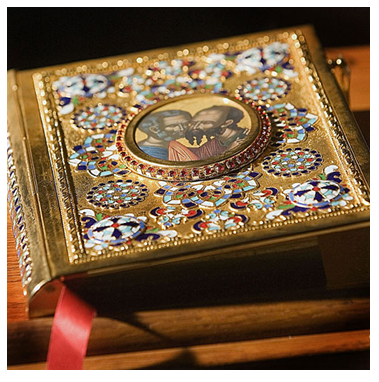
 

Screen shot 2015-01-22 at 7.35.55 PMHoly Tradition and the Holy Scriptures

As a Lutheran, I was finally bold to quote Tradition in my favor. Look, I said, the early Church believed in infant baptism, baptismal regeneration, the real presence. I was not afraid to say this, because I believed it was the Scriptures that ultimately taught these things and the Tradition simply witnessed to it. But whenever I quoted Holy Tradition to support my views, I always felt hypocritical about it. How is it that I can use Tradition for those things when the very same Tradition [Note 3] stands against my belief in Sola Scriptura and Sola Fide? Many Protestants conceded that no church father taught Sola Fide. The only justification I had was that if Tradition teaches something contrary to the Bible, that particular facet of Tradition is to be rejected. What I didn’t realize at that time was that I was setting up my interpretation of the Bible against that of those I disagreed with. I eventually realized it is not as if the Church Fathers weren’t familiar with the Scriptures, but simply that I thought they were wrong. And this is why I couldn’t remain a Protestant in a good conscience. If the Church Fathers got Christianity and the Holy Scriptures wrong, why think I or anybody else got it better? If they erred on so important things, why think they were right about anything at all? If they didn’t have the true gospel, how could I possibly call them Christians or trust them at all? And if they have been so wrong, Christ didn’t fulfill His promise that He would send the Holy Spirit Who would guide the Christians into all truth [Note 4]; and the gates of Hell finally prevailed against the Church [Note 5], until Luther came.


The Problem of Truth

Finally, I encountered the claims of the Eastern Orthodox Church. And I, for once in my life, was (or rather willingly became) vulnerable to Orthodoxy. I just gave up all the fear I’ve had of Eastern Orthodoxy during my Protestant years. And I started reading EO apologetics and arguments online and found myself in agreement with them.  It soon became very clear I was headed East. I’ve read hundreds of articles, arguments and conversion stories online. I was also able to afford some books which have also been of immense help. Meanwhile, I started attending Orthodox services and started immersing myself in the Orthodox way of life, because my Orthodox friends would often tell me how Orthodoxy is more than just a set of beliefs, but a way of life.

And then I found myself in trouble again. On what grounds should I accept the Ecumenical Councils? Or rather, how did the Church accept them? What made a council ecumenical? Also, what if two Orthodox Christians essentially disagreed on certain things? I came to Orthodoxy seeking for doctrinal unity and one-mindedness. And then I discovered that finding doctrinal truth is far more complicated than most of us would admit. If it weren’t so, there wouldn’t be so much diversity and disagreement. Another thing to note is that I also discovered that some things are dogma (absolutely essential) and there were many things that weren’t absolute dogma and that many people held different opinions. So, I came to the realization that dogmatizing what is not a dogma is also dangerous. To elevate a particular opinion over many others just as viable and tenable is evidently problematic, and can also lead to a schism. And that’s what Protestants did and still do, hence the existence of so many denominations. I also found out that the church fathers could be proof-texted and misinterpreted as easily as the Scriptures. What is one to do? How can I know the truth?

However, what I soon came to understand is that the Church does not have any problems with Her teaching at all. The real problem is that I still thought as a Protestant, that truth (and orthodoxy) is just a set of doctrinal propositions and heresy is anything contrary to that. While at the surface level it may seem like that is the case, this is not the Orthodox understanding of truth.  [Notes 6, 7, 8, 9]
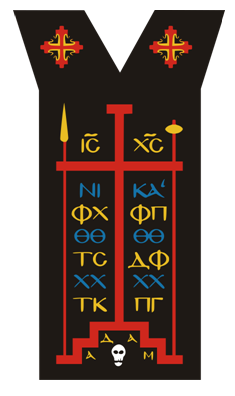
 

Screen shot 2015-01-22 at 7.47.21 PMEnter Apophaticism

Before moving on, let me briefly explain a few very important concepts Eastern theology holds dear.

Apophatic (negative) theology, as opposed to cataphatic (positive) theology, is also known as theological knowledge obtained by negation. It does not say anything about Who or what God actually is (as in cataphatic theology), but rather admits ignorance and only speaks of what God is not. This is because we’re unable to know God as He is in His essence, because He is unlike anything else. We can’t say God exists because existence is characteristic of created things. God is beyond existence. He is called Creator by the virtue that He is uncreated. Yet, there is a way we can know Him, and that is by His energies, or what is more commonly known as His attributes. Thus, another important concept is the Essence-Energies distinction. The energies are fully and truly God, yet they are distinct from His essence. The energies belong to His essence and proceed from His essence as rays proceed from the sun.

All of theology, therefore, is apophatic, because we can’t know God in His essence. We can’t study Him and make positive statements about Him. We can only experience Him in His energies, i.e. His grace in the communal life of the Church, through prayer, ascetic struggle, partaking in the Eucharist and the rest of the Divine Sacraments. This is also known as theosis (lit. deification) which means we become partakers of the divine life by being united to God by His grace, through His Church.

Evagrius of Pontus wrote: “God cannot be grasped by the mind.  If He could be grasped, He would not be God.”  A theological scholar could write a lengthy book about God but still fall woefully short of the reality of God.  To think that we can adequately capture who God is in a book is idolatry.  This is why cataphatic theology inevitably comes up short.  In Orthodoxy a theologian is not so much someone who has done much studying about God but someone who has had an encounter with God.  We need to remember that beyond the text of the Ten Commandments (cataphatic theology) was the mystery of God Moses encountered when he went up Mount Sinai, entered into the thick cloud and in the darkness of the cloud encountered God in holy mystery (apophatic theology) and came down with his face radiant (theosis).  (See Exodus chapters 19, 20, and 34:29-35)

Dogma, then, is not about making positive statements about God, but is rather a limited, apophatic confession of the Mystery which has as its goal to protect the Mystery and discern heresy.  Similarly, heresy is not merely something opposite to a particular set of doctrines, but something which destroys the Mystery and renders Theosis impossible. This, it does by rationalizing certain aspects of the Mystery; overemphasizing one aspect over the others; philosophizing and attempting to make positive statements where such are impossible.
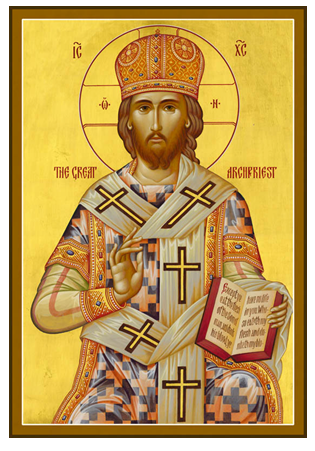
 

"I am the Truth" (John 14:6)

“I am the Truth” (John 14:6)

Truth is a Person

With all that in mind, let me suggest a fresh perspective, a fresh paradigm, which says that Truth is a Person. [Note 10]  Namely, Christ, the Divine Logos, the second person of the Holy Trinity. And this I mean quite literally and apophatically. Christ is ultimately the beginning, the middle, and the end of truth. He is the presupposition, the method and the conclusion.

Let us approach the Mystery of the Incarnation and of the Holy Trinity with a renewed sense of wonder, and childlike trust in the Mystery of our Faith.  Let us prayerfully contemplate this Mystery and constantly be reminded of God’s love for His creation.

And let those who desire to find Christ, put their trust and faith in the Church He established and preserved throughout the ages, even as He promised to do.

To hear Jesus, and not just his words, we have to stand within the tradition of the Church; we have to put our trust in those to whom our Lord entrusted his mission, his sending. Part of the stillness that is needed for us to hear the words of Jesus is a sense of presence, and it is this that tradition conveys. We become Christians by becoming members of the Church, by trusting our forefathers in the faith. If we cannot trust the Church to have understood Jesus, then we have lost Jesus: and the resources of modern scholarship will not help us to find him. – Fr. Andrew Louth

I do not want my readers to come to the conclusion that I’m wholly opposed to academic study and inquiry of history or theology, but I want to state that I believe that even the Church is an article of faith.  We trust the Church just as we trust a teacher to teach us the truth or a doctor to bring healing to our bodies.  If we have no desire to put our faith in Her, then no study and scholarship will be able to help us.  However, academic study is not antithetical or opposed to what the Church teaches, and can prove itself useful in many ways, and for that reason shouldn’t be repudiated.
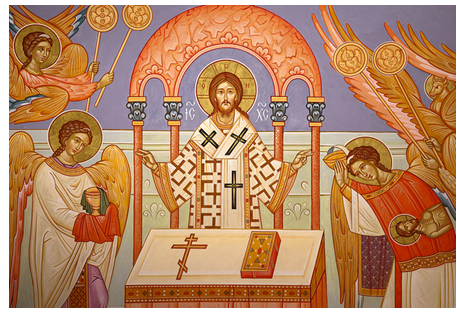
Christ at the Altar

Christ at the Altar


What is important is that we always give the highest priority to the corporate, sacramental, liturgical, prayerful, communal and mystical life of the Church, where we directly experience our union with God and from which every orthodox teaching has its source.  I also want to make it clear that I do not believe in any sort of theological relativism; however, scientific study is incapable of delivering theological truth.

“If you are a theologian, you will pray truly. And if you pray truly, you are a theologian.”  – Evagrius of Pontus


Some Concluding Remarks

Finally, I want to say a few words why I chose Orthodoxy and why I believe the Orthodox Church to be the One Church that our Lord Himself established.

First, the Eastern Orthodox Church (along with the Roman Catholic Church) can claim apostolic succession, unlike Protestant churches, which unfortunately, cannot make the case for that.  The filioque and the papacy, however, seem to me to be what caused a breach in Church unity, since it was the Roman Church along with Her Pope that went rebelled against the authority of the Ecumenical Councils, and thus changed the ecclesiology of the Roman Church. Rome, once part of the conciliar Church, declared Herself the Universal Church, ceasing to be part of the conciliar Church.

Many people think they are criticizing Orthodoxy but what they are really criticizing is their understanding or conception of Orthodoxy.  The Republic of Macedonia is a post-communist society.  This means that many people were raised and indoctrinated in its atheistic ideology.  Many people in my town are nominal Orthodox.  Because they have not been properly catechized they do not understand what Orthodoxy is about and leave the Church.  When Protestants criticize Eastern Orthodoxy they are often criticizing either strawmen or nominal Orthodoxy.

A Place of Beauty (Rivendell)

A Place of Beauty (Rivendell)

And last, but not least, what has drawn me to Orthodoxy is the beauty of the Orthodox Church. A friend on Facebook recently just posted how one of the underrated and underused argument for the existence of God is beauty. And I absolutely agree with that. There is always a very direct and essential connection between truth and the beautiful; what is good and true is beautiful.

Beauty is an important part of our lives, and J.R.R. Tolkien was definitely aware of this. His works reflect the importance of beauty. Unfortunately, modern man has forgotten about beauty altogether.  So much so that modern works both fiction and non-fiction are devoid of beauty. The same is sadly true in much of contemporary Christian theology.  This probably has its roots in Reformation thought as a whole and Calvin’s iconoclasm in particular.  The physical reality of our faith was de-emphasized.  Churches gradually became empty buildings with only pews and the pulpit. This, I believe, is a mere reflection of the abandoned spiritual beauty.  The de-emphasis of beauty in theology resulted with the de-emphasis of beauty in worship, and ultimately in all of human culture.  Reading Tolkien has helped me to appreciate the spiritual importance of beauty.  His description of beautiful places like the Shire, Lothlorien, and Rivendell has opened my mind and heart to the spiritual beauty of the kingdom of God.  In the Orthodox Church I found that truth is beautiful.  There is a passage that describes the elves singing songs in the Hall of Fire in Rivendell that reminds me of the Liturgy.  The Divine Liturgy is heaven on earth.

At first the beauty of the melodies and of the interwoven words in elven-tongues, even though he understood them little, held him in a spell, as soon as he began to attend to them.  Almost it seemed that the words took shape, and visions of far lands and bright things that he had never yet imagined opened out before him; and the firelit hall became like a golden mist above seas of foam that sighed upon the margins of the world.  Then the enchantment became more and more dreamlike, until he felt that an endless river of swelling gold and silver was flowing over him, too multitudinous for its pattern to be comprehended; it became part of the throbbing air about him, and it drenched and drowned him.


408617_520274531363964_1480562585_nNo, I’m not merely speaking of outward beauty (though that is not without its importance), but rather of the spiritual beauty Orthodoxy possesses. Orthodoxy is organic, holistic and therapeutic – it is meant to heal and restore the whole person.  It is personal though not individualistic. Beyond that there is the Holy presence of God, that is able to instill proper reverence and fear of God in the heart of anyone who sincerely approaches God. And the whole spiritual experience, hard as it may be, is filled with joy and spiritual peace.

Similarly, if someone asks me why I’m a Christian, I would say that it is the only thing in the world that can satisfy my deepest needs, both aesthetically, morally, theologically, philosophically and existentially. It is the only thing worth living for!


References

Note 1
Jesus said to him, “I am the way, and the truth, and the life. No one comes to the Father except through me. If you had known me, you would have known my Father also. From now on you do know him and have seen him.” – John 14:6,7 ESV
Note 2
So Philip ran to him and heard him reading Isaiah the prophet and asked, “Do you understand what you are reading?” And he said, “How can I, unless someone guides me?” And he invited Philip to come up and sit with him. – Acts 8:30,31 ESV
Note 3
So then, brothers, stand firm and hold to the traditions that you were taught by us, either by our spoken word or by our letter. – 2 Thessalonians 2:15 ESV
Note 4
 When the Spirit of truth comes, he will guide you into all the truth, for he will not speak on his own authority, but whatever he hears he will speak, and he will declare to you the things that are to come. – John 16:13 ESV
Note 5
 And I tell you, you are Peter, and on this rock I will build my church, and the gates of hell shall not prevail against it. – Matthew 16:18 ESV
Note 6
 [I]f I delay, you may know how one ought to behave in the household of God, which is the church of the living God, a pillar and buttress of the truth. – 1 Timothy 3:15 ESV
Note 7
 As I have already observed, the Church, having received this preaching and this faith, although scattered throughout the whole world, yet, as if occupying but one house, carefully preserves it. She also believes these points [of doctrine] just as if she had but one soul, and one and the same heart, and she proclaims them, and teaches them, and hands them down, with perfect harmony, as if she possessed only one mouth. For, although the languages of the world are dissimilar, yet the import of the tradition is one and the same. For the Churches which have been planted in Germany do not believe or hand down anything different, nor do those in Spain, nor those in Gaul, nor those in the East, nor those in Egypt, nor those in Libya, nor those which have been established in the central regions of the world. But as the sun, that creature of God, is one and the same throughout the whole world, so also the preaching of the truth shines everywhere, and enlightens all men that are willing to come to a knowledge of the truth. Nor will any one of the rulers in the Churches, however highly gifted he may be in point of eloquence, teach doctrines different from these (for no one is greater than the Master [the Church]); nor, on the other hand, will he who is deficient in power of expression inflict injury on the tradition. For the faith being ever one and the same, neither does one who is able at great length to discourse regarding it, make any addition to it, nor does one, who can say but little diminish it.St. Irenaeus, Against All Heresies
Note 8
For as we ceased to seek for truth (notwithstanding the professions of many among Greeks and Barbarians to make it known) among all who claimed it for erroneous opinions, after we had come to believe that Christ was the Son of God, and were persuaded that we must learn it from Himself; so, seeing there are many who think they hold the opinions of Christ, and yet some of these think differently from their predecessors, yet as the teaching of the Church, transmitted in orderly succession from the apostles, and remaining in the Churches to the present day, is still preserved, that alone is to be accepted as truth which differs in no respect from ecclesiastical and apostolical tradition. Origen, On First Principles
Note 9
 In reference, however, to the character of Novatian, dearest brother, of whom you desired that intelligence should be written you what heresy he had introduced; know that, in the first place, we ought not even to be inquisitive as to what he teaches, so long as he teaches out of the pale of unity. Whoever he may be, and whatever he may be, he who is not in the Church of Christ is not a Christian. Although he may boast himself, and announce his philosophy or eloquence with lofty words, yet he who has not maintained brotherly love or ecclesiastical unity has lost even what he previously had been… But apostates and deserters, or adversaries and enemies, and those who lay waste the Church of Christ, cannot, even if outside the Church they have been slain for His name, according to the apostle, be admitted to the peace of the Church, since they have neither kept the unity of the spirit nor of the Church. – St. Cyprian
Note 10
For years in my studies I was satisfied with being ‘above all traditions’ but somehow faithful to them… When I visited an Orthodox Church, it was only in order to view another ‘tradition’. However, when I entered an Orthodox Church for the first time (a Russian Church in San Francisco) something happened to me that I had not experienced in any Buddhist or other Eastern temple; something in my heart said this was ‘home,’ that all my search was over. I didn’t really know what this meant, because the service was quite strange to me and in a foreign language. I began to attend Orthodox services more frequently, gradually learning its language and customs… With my exposure to orthodoxy and Orthodox people, a new idea began to enter my awareness: that Truth was not just an abstract idea, sought and known by the mind, but was something personal–even a Person–sought and loved by the heart. And that is how I met Christ.” Fr. Seraphim Rose


Theosis and Our Salvation in Christ

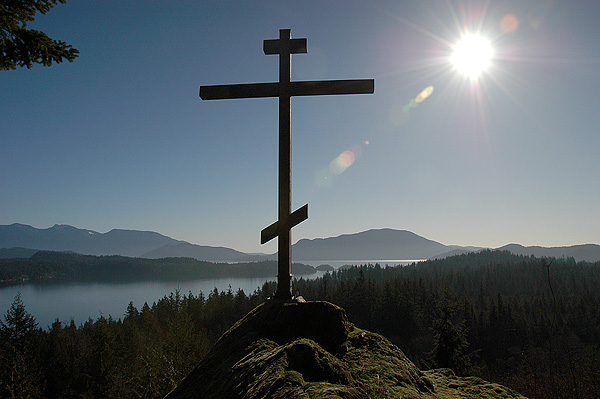
 Cross russian against alaskan sky-1


Athanasius the Great summed up the connection between the Incarnation and our salvation in the famous line: God became human, so that we might become god.  The doctrine of theosis (deification) sums up the Orthodox understanding of salvation in Christ.  It is also the source of friction between Reformed and Orthodox Christians.  In this blog posting I will show how the Orthodox understanding of theosis is grounded in Scripture and affirmed in the teachings of the early Church Fathers.  In light of the controversial nature of theosis I will be highlighting the Orthodox understanding of theosis through the comparing of paradigm differences between Orthodoxy and the Reformed tradition.  I close with a discussion of the practical consequences of the paradigmatic differences.


2 Peter 1:3-4

Many Protestants find the doctrine of theosis dubious despite the fact it is found in Scripture.   We read in 2 Peter 1:3-4:

His divine power has given us everything we need for life and godliness through our knowledge of him who called us by his own glory and goodness.  Through these he has given us his very great and precious promises, so that through them you may participate in the divine nature and escape the corruption in the world caused by evil desires. (NIV)

This does not mean we participate in God’s essence (ousia).  Rather we are transformed into the likeness of Christ through participation in his grace, i.e., divine energies.  The footnote commentary in the Orthodox Study Bible for 2 Peter 1:4 reads:

This [Theosis] does not mean we become divine by nature.  If we participated in God’s essence, the distinction between God and man would be abolished.  What this does mean is that we participate in God’s energy, described by a number of terms in scripture, such as glory, life, love, virtue, and power.  We are to become like God by his grace and truly His adopted children, but never becoming God by nature.

The phrase “participate in the divine nature” (NIV) or “partakers of the divine nature” (KJV, OSB) is a translation of: “γένησθε θείας κοινωνοὶ φύσεως. [Greek NT]  The Greek for “participate” or “share” is κοινωνος (koinonos) which has a range of meanings.  It has been used with reference to sharing in glory (1 Peter 5:1), sharing in Christ’s suffering (Philippians 3:10), and fellowship in the Holy Spirit (Philippians 2:1).  It can have a spiritual/sacramental sense.  Participation in a religious service, Christian or otherwise, has definite spiritual consequences.  Participation in a pagan sacrifice results in participation with demonic forces (1 Corinthians 10:20) and likewise participation in the Eucharist results in participation in Christ’s body and blood (1 Corinthians 10:16). The emphasis here is on participation, transformation, and experiential change, rather than a judicial declaration of legal status. This distinction is central to the different attitude Orthodox and the Reformed have toward the fullness of salvation in Christ.

Koinonos can connote a sharing in similar circumstances, e.g., “just as you share in our sufferings, so also you share in our comfort” (2 Corinthians 1:7).  The word can have relational connotations, e.g. “you became companions of those who were so used” (Hebrews 10:33; KJV); “if you consider me a partner” (Philemon 17; NIV).

The other key word in 2 Peter 1:4 is φυσις (physis).  It can mean biological descent/nature: “we who are Jews by nature” (Galatians 2:13; KJV) or spiritual condition: “by nature children of wrath” (Ephesians 2:3; KJV).  Paul in Romans uses the word physis in some rather interesting ways.  In Romans chapter 2 he points out that there are Gentiles who are “not circumcised physically” (Romans 2:27; NIV) but who “do by nature things required by the law” (Romans 2:14; NIV).  The expectation here is that both the outward and inward natures would complement the other.  In other words our inner spiritual life ought to be expressed in our outward actions.  So likewise our actions should flow from our inner life.  And just as significant is the possibility that one’s nature can change, be transformed.  In Romans 1:26-27 Paul wrote about “natural desires” (NIV) being “exchanged” (NIV) for unnatural ones.  Just as sin results in the alteration of human nature so likewise salvation in Christ calls for a reverse alteration in human nature (cf. Romans 12:2).

While the original Greek koinonos (partaker) has a broad range of meanings, it is restricted by physis (nature).  The relational and circumstantial meanings are excluded leaving either sacramental or biological meanings as the most likely options.


The Biblical Basis for Theosis

The biblical basis for theosis begins with the creation account in Genesis.  Theosis is implicit in the doctrine of the imago dei: humanity being made in the divine image.

Let us make man in our image, in our likeness, and let them rule over the fish of the sea and the birds of the air, over the livestock, over all the earth, and over all the creatures that move along the ground. (Genesis 1:26; NIV)

The divine likeness implies our calling to be in communion with God, this makes man unique to the rest of Creation.  This goes beyond the legal model which focuses more on our external legal or judicial status and good moral behavior – rather than the transformation of our inner nature.  As a result of Adam and Eve’s sin the image of God has become marred in us.  In the Incarnation God came to restore the imago dei.  Salvation as theosis is based on the restoration of the image of God in us which in turn calls for the restoration of communion with God resulting in a change in human nature, i.e., ontological consequences.

The Apostle Paul in 2 Corinthians describes the Christian life as one of progressive transformation.

And we, who with unveiled faces all reflect the Lord’s glory, are being transformed into this likeness (image) with ever-increasing glory, which comes from the Lord, who is the Spirit. (2 Corinthians 3:18; NIV)

The reference to the visible transformation of Moses’ appearance in 2 Corinthians 3:13 points to an ontological transformation, not just behavioral and attitudinal changes.

Theosis also has eschatological implications; we find in the Apostle John’s first epistle:

Dear friends, now we are children of God, and what we will be has not yet been made known.  But we know that when he appears, we shall be like him, for we shall see him as he is. (1 John 3:2-3; NIV; emphasis added)

Theosis finds its culmination in our entering into the life of the Trinity.  In John 17 we read:

I have given them the glory that you gave me, that they may be one as we are one.  I in them and you in me.  May they be brought to complete unity . . . .    (John 17:22-23; NIV)

As Christians we are called to be more than good people or even glorified beings like angels, we are called into the fellowship of love that is the Trinity.  Thus, the Orthodox understanding of salvation is profoundly Trinitarian in implication.

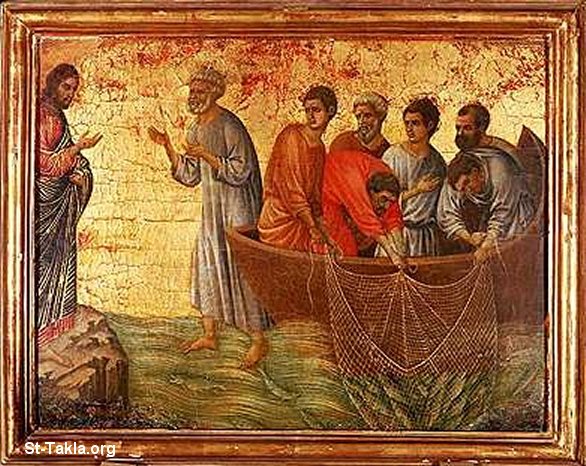
Peter Walking on Water

In Scripture there are several accounts of theosis taking place.  Theosis is implied in the account of Jesus walking on water in Matthew 14.  Jesus’ walking on water was a sign of his divinity.  Just as Jesus walked on water so did Peter implying Peter’s sharing in Jesus’ divinity.  Note that Peter did not ask Jesus to grant him the ability to walk on water but that he be allowed to be with Jesus: “Lord, if it’s you tell me to come to you on the water.” (Matthew 14:28; NIV)  This is the goal of theosis: union with Christ.  Notice also that Peter was able to walk on water so long as he kept his eyes on Jesus, but the moment he became distracted and fearful he began to sink.  Jesus reached out his hand and grabbed hold of Peter; this is a sign of God’s grace to us.

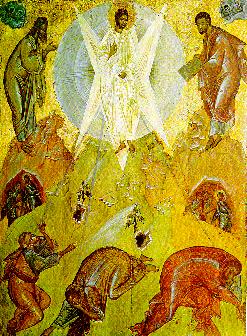
Icon - Holy Transfiguration

Icon – Holy Transfiguration

Theosis is also found in the Gospel accounts of the Transfiguration where the transfigured Christ speaks to the Old Testament saints Moses and Elijah.  In Luke’s account we read that Moses and Elijah “appeared in glorious splendor” and that they talked to Jesus about his impending death (9:31).  What happened was that the glory that Jesus had with the Father before the world began (John 17:5) was made manifest to his followers.  Jesus’ glory is intrinsic to his nature.  This glory attests to Jesus’ divinity.  Just as striking is the fact that Moses and Elijah were also clothed in glory.  This point to their having been transfigured into glorified beings by God’s grace.  Their conversing with Christ points to their having acquired divine wisdom as to God’s will.  The contrast between the two Old Testament saints standing up and the three disciples on the ground sleeping shows the progressive nature of Christian discipleship.  Right now we are bumbling, fumbling followers of Christ but one day we will reach the state of enlightenment like that of Moses and Elijah.  Sainthood is not for the fortunate few but for all Christians.  The Orthodox approach to spiritual pedagogy is old school; the bar is set high and those who attain perfection are given due recognition.  Orthodox spirituality is not like modern education where you win the prize just for being there.  The term “saint” has a real meaning in Orthodoxy when it comes to spiritual advancement.


The Witness of the Church Fathers

In the early fourth century there took place a fierce controversy over whether or not Jesus was truly divine.  For the early Christians this was not an abstract doctrinal dispute but one of immense consequence for our salvation.  A Protestant would explain the necessity of Christ’s divinity in terms of his bearing the sins of the world.  Such an argument is congruent with the penal substitutionary atonement theory but this is not the line of argumentation used by the early church fathers.  Instead we read in Athanasius the Great’s On the Incarnation the reason for the Incarnation:

For He was made man that we might be made God; and He manifested Himself by a body that we might receive the idea of the unseen Father; and He endured the insolence of men that we might inherit immortality. (§54; emphasis added)

This was not a novelty by Athanasius.  One of the earliest witnesses to theosis is Irenaeus of Lyons in Against Heresies.

. . . our Lord Jesus Christ, who did, through His transcendent love, become what we are, that He might bring us to be even what He is Himself. (AH 5 Preface; emphasis added)


Augustine on Theosis

The early church fathers took care to emphasize that deification is not intrinsic to human nature but a consequence of God’s mercy.  Augustine of Hippo makes the critical point that we are deified by grace and not by nature.

See in the same Psalm those to whom he says, “I have said, You are gods, and children of the Highest all; but you shall die like men, and fall like one of the princes.” It is evident then, that He has called men gods, that are deified of His Grace, not born of His Substance. For He does justify, who is just through His own self, and not of another; and He does deify who is God through Himself, not by the partaking of another. But He that justifies does Himself deify, in that by justifying He does make sons of God. “For He has given them power to become the sons of God.” John 1:12 If we have been made sons of God, we have also been made gods: but this is the effect of Grace adopting, not of nature generating. (Augustine Exposition on Psalm 50)


Protestant Mistranslation

Nicene and Post Nicene Fathers

Nicene and Post Nicene Fathers series

Given the catholicity of the doctrine of theosis among the early church fathers, it is puzzling that Protestants would be so reluctant to embrace it.

This bias is so strong as to create a blind spot among its leading patristic scholars. Take for example Gregory Nazianzen’s Oration I in which he asserted:

Let us become like Christ, since Christ became like us.  Let us become gods for his sake, since he for our sake became man.

The Nicene and Post-Nicene Fathers (NPNF) series contains a serious mistranslation of the same passage.  It reads:

Let us become like Christ, since Christ became like us.  Let us become God’s for His sake, since He or ours became Man.  (NPNF Second Series Vol. VII, p. 203)

The Greek text in Migne’s Patrologia Graecae Vol. 35 “Oration I – In Sanctum Pascha” (Section 17, p. 358) reads:

“γενωμεθα θεοι δι’ αυτον” (let us become gods for his sake).

It appears that the translators for the NPNF Church Fathers series mistranslated the text due to their Protestant biases!  It is surprising and disheartening that there is no footnote offering an alternative reading.  Caveat lector!

This leads to the question: Why is the doctrine of theosis so little known among Western Christians?  And when they do learn about theosis why are Protestants often hostile to the doctrine of theosis?  My suspicion is that what is at work here are differences in theological paradigms.


I. What’s Your Paradigm?

Creator-Creature Distinction

Paradigms provide the framework by which we organize data and exclude data.  Because they frame the way we see reality, paradigms are often invisible to us.  Because paradigms are not as explicit as doctrine, it takes a bit of detective work to discern the philosophical assumptions that shape a theological tradition.

The Creator-creature distinction that runs through Reformed theology has shaped its theory of knowledge (epistemology) as well as its theory of salvation (soteriology) and its understanding of the Christian life (spiritual formation).  Karl Barth in his struggle against Liberalism and natural theology stressed the “infinite qualitative distinction” between the human the divine.  It also forms the basis for the Reformed tradition’s radical understanding of grace in salvation, and in absolute categories where man can in no way contribute to his salvation; it is all divine grace.  This leads to the principle of monergism which in turn leads to double predestination, that is, God alone determines who will be saved and who will be damned.

This Creator-creature distinction has become more explicit in recent theological discussions on the Internet.  Derek Rishmawy in a 2012 blog article wrote:

So, the idea is that because there is a radical gap in reality between God and ourselves–he is necessary, infinite, transcendent, etc. and we are contingent, finite, bound–there is also a radical gap in our knowledge. In the same way that God’s reality is at a higher level than ours and sustains ours, the same is true of our knowledge. (Emphasis added.)

Reformed apologist Michael Horton affirmed the Creator-creature distinction in his criticism of the God of the gaps apologetic strategy:

Accordingly, to the extent that a certain state of affairs can be attributed to natural (human or nonhuman) causes, God is not involved.  Again we meet the troubling univocity of being, which fails to recognize the Creator-creature distinction and the analogical character of creation in its relationship to God.  (The Christian Faith, p. 338; emphasis added.)

Closer to the topic of theosis is Reformed pastor Steven Wedgeworth’s blog article: “Reforming Deification.”   In it Wedgeworth expressed in colorful language his concerns about theosis.

The doctrine of deification (or theosis) is one of those doctrines that, in the words of one esteemed divine, “gives us the willies.”

He continues a little further:

The dangers of the wrong-kind of deification theology should be obvious. Collapsing the Creator-creature distinction, or even just smudging it a little, is seriously bad juju.


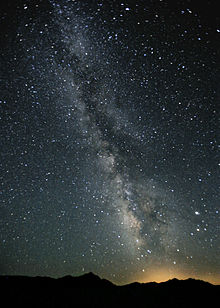
Milky Way Galaxy

Milky Way Galaxy

The Reformed emphasis on the Creator-creature can be overstated at times.  While the Bible does teach the Creator-creature distinction, it also situates humanity at the crux of the Creator-cosmos nexus.  In Genesis God climaxes creation with the making of man in his image and conferring on humanity lordship over creation.  The Creator-creature paradigm takes an interesting new direction with the Incarnation.  The Creator God comes down from heaven and becomes a creature.  The Infinite becomes finite.  The invisible becomes visible.  The intangible becomes tangible.  The Eternal enters into history.


"The Unsleeping Eye" Source

“The Unsleeping Eye” Source

The uncontainable Word becomes confined in the Virgin’s womb. The one who made the Milky Way galaxy becomes a babe who suckles at the Theotokos’ breast. The Immortal God dies on the Cross for our salvation.

Mankind doomed to nothingness is rescued by Christ’s dying on the Cross, his third day Resurrection, and his Ascension.  Then in the mystery of Pentecost Jesus we are given the Third Person of the Trinity, the Holy Spirit.

Did Calvin Follow the Church Fathers on Theosis?

The doctrine of theosis challenges the Reformed theological paradigm because of its explicit endorsement in 2 Peter 1:3-4.  This leads to two questions: (1) How did Calvin understand 2 Peter 1:3-4? and (2) Did Calvin in fact believe in theosis?  When we look at Institutes 3.25.10 we find something quite close to the Orthodox doctrine of theosis.  The only difference is that Calvin seems to understand the conferring of divine glory, power, and righteousness as future events that accompany the resurrection, not as blessings for the current age.  Calvin writes:

Indeed, Peter declares that believers are called in this to become partakers of the divine nature [II Peter 1:4].  How is this? Because “he will be . . . glorified in all his saints, and will be marveled at in all who have believed” [II Thess. 1:10].  If the Lord will share his glory, power, and righteousness with the elect—nay, will give himself to be enjoyed by them and, what is more excellent, will somehow make them to become one with himself, let us remember that every sort of happiness is included under this benefit. (Institutes 3.25.10)

Did Calvin affirm theosis?  Consider the following:

Let us then mark, that the end of the gospel is, to render us eventually conformable to God, and, if we may so speak, to deify us. (Commentary 2 Peter 1:4)

But as we read on we find Calvin qualifying his earlier statement:

But the word nature is not here essence but quality. The Manicheans formerly dreamt that we are a part of God, and that, after having run the race of life we shall at length revert to our original. There are also at this day fanatics who imagine that we thus pass over into the nature of God, so that his swallows up our nature. (Commentary 2 Peter 1:4)

Thus, Calvin’s concern that theosis not be understood as our sharing in God’s essence is identical to Orthodoxy’s.

So, what did theosis mean for Calvin?  He writes:

They [the Apostles] only intended to say that when divested of all the vices of the flesh, we shall be partakers of divine and blessed immortality and glory, so as to be as it were one with God as far as our capacities will allow. (Commentary 2 Peter)

For Calvin theosis consists of our “reverting to our original” state, that is, a return to Adam’s original pre-Fall condition.  It appears that Calvin did not give much thought to the possibility that our union with Christ the Second Adam may result in something rather different.  In other words, Calvin underestimated the significance of the Incarnation for our salvation.  Morna Hooker writes:

If Christ has become what we are in order that we might become what he is, then those things which governed and characterized the old life of alienation from God in Adam no longer apply.  It is the old man, i.e. the Adamic existence, which is crucified with Christ, Rom. 6.6 . . . [St. Paul] writes continually to his converts – Be what you are!  Man has been recreated, called to be ‘holy’ – he should believe it and behave accordingly.  (In Fr. Ted’s blog)

Calvin assumes that theosis is accomplished through a process of the removing of the “vices of the flesh.”  This is consistent with the moral or juridical understanding of salvation but to share in immortality and divine glory has ontological implications that Calvin seems reticent to pursue.  Prof. J. Todd Billings in a 2005 Harvard Theological Review article examined Calvin’s understanding of deification and found that although Calvin interacted with the early church fathers his understanding of deification is “distinctive” (p. 334).  Rather than follow in the hermeneutical tradition of the early church fathers, Calvin here is venturing off in his own direction with a new interpretation.  In time this would give rise to a new form of spirituality.


II. What’s Your Paradigm?

Sanctification = Theosis?

Is theosis another name for sanctification?  The Protestant doctrine of sanctification does bear a certain resemblance to Orthodoxy’s theosis.  Both involve the healing of the effects of sin, are progressive in nature, and culminate at the Second Coming.  Another important similarity is that both are the result of the Holy Spirit in the Christian.  But there are significant paradigm differences beneath the surface.

The Orthodox understanding of theosis is based on a sacramental worldview in which matter is viewed as capable of conveying divine grace.  In this worldview the possibility is there for human beings to become channels of divine grace.  As we grow in holiness, as our hearts become cleansed of the passions the life of God pervades our whole being with spillover effects.  In contrast, Protestantism understands sanctification as moral transformation or an attitudinal change that leads to behavioral change.  This is congruent with its dominant legal approach to salvation. Protestantism not only suspicious of, it implicitly denies the ontological transformation foundational to the Orthodox understanding on theosis.

But the question I have for my Protestant friends is this: Does your understanding of sanctification also allow for ontological transformation?  When one reads the history of Protestantism one has to wonder: Where are the saints?  Where are the believers whose lives are marked by extraordinary sanctity, steeped in prayer, and transfigured by the Divine Light that shone at Mount Tabor?  The prominent personalities in Protestant history tend to be theologians known for their theological insights, e.g., Martin Luther, John Calvin, Ulrich Zwingli, John Wesley, Charles Hodge, Jonathan Edwards, or Karl Barth.  Or for their preaching ministries, e.g., George Whitefield, Billy Sunday, Charles Spurgeon, D.L. Moody, Billy Graham; or missionaries, e.g., Hiram Bingham, Adoniram Judson, Samuel Zwemer, Jim Elliot, etc.  Implicit in the culture of Protestantism is the priority on theology, preaching, and evangelism, and the downplaying of lives transformed through prayer and ascesis.


www.uncutmountainsupply.com

www.uncutmountainsupply.com

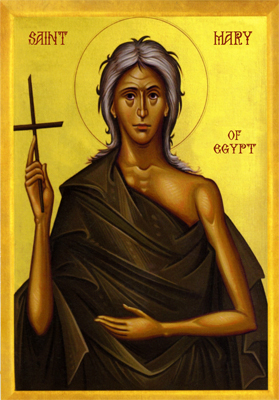
When one reads the history of Orthodoxy one comes across the lives of the saints: Anthony the Great, Mary of Egypt, Seraphim of Sarov, John of Kronstadt, Elder Paisios, John of Shanghai and San Francisco the Wonderworker, Father Arseny, Matushka Olga, etc. — all in the tradition of ‘holy men’ and ‘holy women.’  Ordinary people drawn to these saints because of their sanctity sought the saints’ counsel and their prayers.  The saints are empirical proofs of theosis.

The absence of visible saints in Protestantism is something Fr. Stephen Freeman has touched on.  He posed the question: “What would Christianity mean if there were no saints?”

What would be the meaning of the Christian gospel if there were no wonderworkers, no people who had been transfigured with the Divine Light, no clairvoyant prophets, no healers, no people who had raised the dead, no ascetics living alone in the deserts for years on end, no beacons of radical, all-forgiving love?  (“Saintless Christianity“)

He continues:

The Christian gospel, as recorded in the Scriptures and maintained in Classical Christianity, is replete with the artifacts of holiness – tangible, living examples of transfigured lives – not morally improved but something other. Human beings becoming gods (in the bold language of the early fathers).

He points out that the Protestant Reformation with its rejection of good works and the sacramental worldview resulted in a two story universe in which the world below is separated from the spiritual world of heaven.  Many Evangelicals will recognize the unsettling similarity to what the Protestant apologist Francis Schaeffer called the two-story model of modernity.  This has resulted in a sort of egalitarian democratization of Christiana spirituality in which all Christians are saints thereby implicitly denying any extraordinary sainthood. However, the New Testament Scriptures speak openly of the full gamut of Christian: from babes in Christ blown about by every whim of doctrine to those of “full age” able to handle strong meat.  Just as significant is the fact that the Apostle Paul whom so many Protestants admire as a theologian was a wonder worker (Acts 19:11) and  a visionary (2 Corinthians 12:1-4).  This flattening of all Christians into one mold has been consequential for Protestant spirituality.  The striking absence of visible saints makes one wonder if the emphasis on spiritual equality was worth the price.

In contrast to Protestantism’s two story universe, Irenaeus of Lyons held to the pre-modern one story model of the universe.  In his understanding of salvation Irenaeus anticipates a change in Christians like that promised in 2 Peter 13-4.  He affirmed the possibility of the flesh of the Christian partaking of the divine life.

But if they are now alive, and if their whole body partakes of life, how can they venture the assertion that the flesh is not qualified to be a partaker of life, when they do confess that they have life at the present moment? It is just as if anybody were to take up a sponge full of water, or a torch on fire, and to declare that the sponge could not possibly partake of the water, or the torch of the fire. (AH 5.3.3; emphasis added)

The tendency in Orthodoxy has been to take the image of the flame quite literally.  There is a well known story in Orthodoxy’s mystical tradition:

Abba Lot went to see Abba Joseph and said to him, ‘Abba as far as I can I say my little office, I fast a little, I pray and meditate, I live in peace, and, as far as I can, I purify my thoughts. What else can I do?’ Then the old man stood up and stretched his hands towards heaven. His fingers became like ten lamps of fire and he said to him, ‘If you will, you can become all flame.’


The Goal of Our Salvation

icon_second_comingWhile theosis is ongoing in this life, it finds its fulfillment at the Second Coming of Christ.  Is the doctrine of theosis part of the Western theological tradition?  I would say that while salvation as theosis is not prominent, it is there.

One good example of theosis is the conclusion of C.S. Lewis’ sermon “Weight of Glory”:

It is a serious thing to live in a society of possible gods and goddesses, to remember that the dullest and most uninteresting person you talk to may one day be a creature which, if you saw it now, you would be strongly tempted to worship, or else a horror and a corruption such as you now meet, if at all, only in a nightmare.

All day long we are, in some degree, helping each other to one or other of these destinations. It is in the light of these overwhelming possibilities, it is with the awe and the circumspection proper to them, that we should conduct all our dealings with one another, all friendships, all loves, all play, all politics. There are no ordinary people. You have never talked to a mere mortal. Nations, cultures, arts, civilization—these are mortal, and their life is to ours as the life of a gnat. But it is immortals whom we joke with, work with, marry, snub, and exploit—immortal horrors or everlasting splendours.

Orthodoxy’s teaching on theosis offers a vision of Chrstian discipleship that is much more daunting and challenging than that of Protestantism.  What it aspires to is far more exhilarating and exciting than what many Protestants imagine.  For inquirers investigating Orthodoxy theosis points to the possibility of Christianity being more than rational theological systems and practical self improvement, it offers access to an enchanted one story universe of incense, chants, ancient hymns, fragrant oils, holy sacraments, miraculous icons, relics, and ordinary people who become extraordinary saints.  The ordinary everyday world becomes one charged with possibilities and sacred moments as we say ‘hi’ to possible gods and goddesses during the week.  Sunday morning worship is no longer just a half hour sermon with hymns or a relevant message with praise songs, but the moment when heaven strikes earth like lightning and people are swept up into heaven to be with the cherubim and seraphim before the Throne of Glory.

Robert Arakaki

Solo versus Sola Scriptura: What’s the Diff?


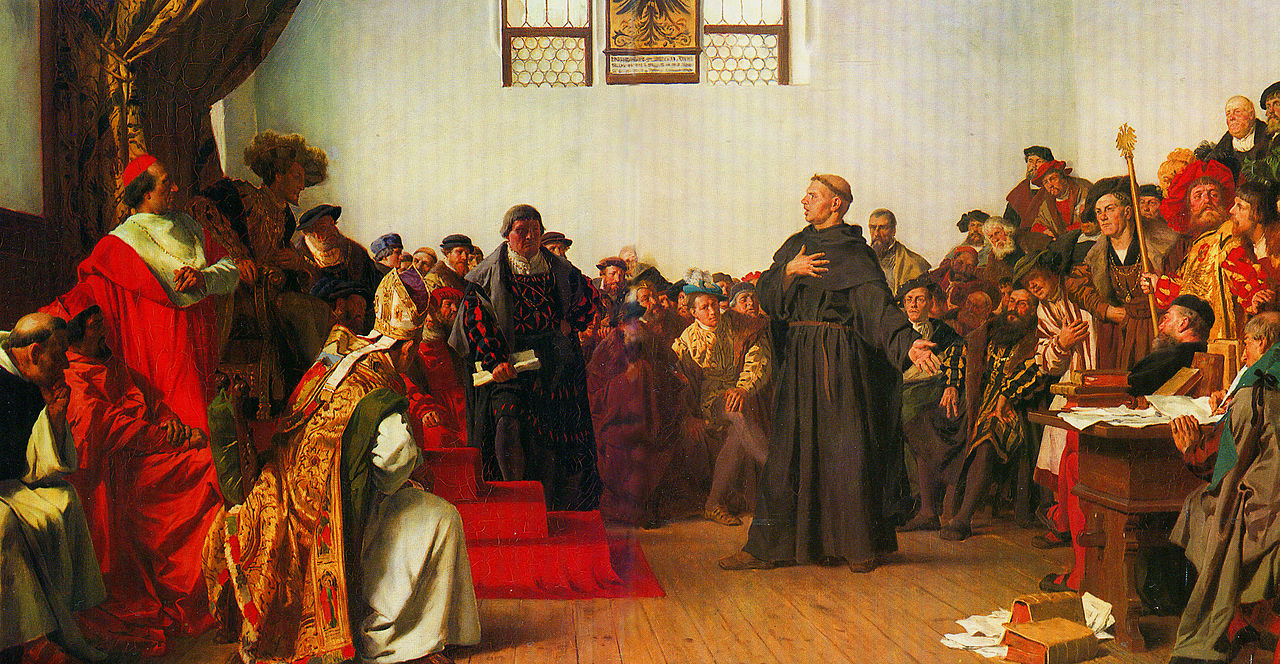
Luther Invoking Sola Scriptura at the Diet of Wurms

Luther Invoking Sola Scriptura at the Diet of Wurms

Father Andrew Stephen Damick recently wrote: Protestants and a Churchless Tradition: “Sola” vs. “Solo” Scriptura.  It’s an excellent article and I encourage readers to read the entire article.  In this article I have excerpted parts of Father Andrew’s article and used it as a basis my take on what is happening with the recent rediscovery of historic sola scriptura by Evangelicals.


Hipster Liturgist  Source

The Latest Evangelical Fad – Tradition is Cool!

Fr. Andrew describes the high church fad sweeping the Evangelical world:

Charismatics are celebrating Lent. Baptists are talking about the Eucharist. The inscrutable maybe-universalist and now Oprah-darling Rob Bell is even using the phrase the tradition. Maybe this tradition stuff isn’t so bad. I can branch out a little. I can line up some Athanasius next to my MacArthur, and a volume or two of Gregory of Nyssa next to my Bonhoeffer. Osteen still goes somewhere preferable near the bottom. (Who gave me that book, anyway?) Maybe we’ll put Origen down there with him. Both are questionable, right? Oh, hey, I’ve heard Ratzinger is kind of interesting. And that “wounded healer” Nouwen guy’s onto something. Has anyone heard of someone named “Schmemann”?

Welcome to the club, the Lutherans and certain Reformed types say. We’ve been waiting for you. Help yourself to some creeds. We hope you’ll stay for some liturgy.

And we hope you’ve discovered the difference between sola and solo scriptura.


Simple Fundamentalism versus Sophisticated Evangelicalism

Most Evangelicals grew up on what Keith Mathison calls solo scriptura.  They were taught that all that is needed is the Bible – no external authority or assistance is needed for understanding Scripture.  (See my review of Keith Mathison’s The Shape of Sola Scripture.) This approach can be traced to Alexander Campbell, an American revivalist who lived in the early 1800s.  Out of the frontier revivals came the motto: No creed but Christ, no book but the Bible.

In recent years Evangelicals in growing numbers have begun to discover Church history. They are venturing beyond Evangelicalism’s provincial sub-culture to explore the broad and diverse Christian traditions: historic Protestant Reformation, early Christianity, mysticism, Roman Catholicism, and Orthodoxy.  They soon discover that the original Protestant Reformers were not afraid to use creeds or to cite the early church fathers and that the Bible only slogan they grew up on is different from what Luther and Calvin taught.  Classical sola scriptura while affirming Scripture as the supreme authority in matters of faith and practice allowed for creeds and the early church fathers.  The original Reformers had a far higher view of the church compared to many Evangelicals today who question whether church membership is necessary to Christian discipleship.


Is Sola Scriptura Enough?

In recent years Evangelicals have begun to question and criticize solo scriptura.  Keith Mathison points out that solo scriptura results in everything being evaluated in accordance with the individual believer’s opinion of what is Scriptural.  As a corrective Evangelicals like Mathison have begun to call for a more communal and historically informed approach to Scripture, i.e., sola scriptura.

Father Andrew notes that to say sola scriptura involves a communal reading of Scripture leads to important questions about the church.

The Church is there to help. The Church will interpret the Bible together. I don’t have to go it alone.

But what if my church is wrong? What about when my church interprets it in a manner that contradicts the Methodists down the block? Who’s right? Just read the Scripture? But that’s what I’ve been doing!

What is missing here is ecclesiology.

Father Andrew notes:

One can say that the Church has authority to interpret Scripture, but which Church? Is it all of them? What about the fact that they don’t all agree? And no, they don’t even all agree on essentials. “Which Church?” is a critical question, and it’s one that isn’t being asked very much in these discussions. Still further, “What is the Church?” is also just as critical, and I fear it’s also gotten lost somewhere. The second question finally leads to the first. If you can figure out what the Church is, then you will realize that not all “churches” are the Church.

If not all churches are the Church, then that means there’s got to be one that is that One. The Bible talks about only one.

Thus, historic sola scriptura becomes deeply problematic in light of Protestantism’s deep rooted denominationalism.  I have called this “Protestantism’s fatal genetic flaw.” (See article.)


Cause for Rejoicing

Father Andrew finds Evangelicalism’s recent discovery of church tradition cause for rejoicing.

I’m overjoyed, of course, that Baptists, Lutherans, Calvinists and others should want to read the Church Fathers, sign onto the ancient creeds, and so forth. This is very good news, and I can only believe that it is likely they will thereby move closer to the faith that I hold as an Orthodox Christian.

We also rejoice with Father Andrew that Evangelicals are discovering the early Church and that they are discovering the Liturgy.  Evangelicals are rediscovering their family roots and finding out about the ancient treasures of historic Christianity.

This has given rise to a curious kind of ecumenicism.  Some Evangelicals tell me that they too reject sola scriptura (i.e., they reject solo scriptura) and that they too accept church tradition like the Orthodox.  Or they will maintain that classical Protestantism like Orthodoxy allows for creeds, liturgies, and the church fathers.  What is being implied here is that high church Evangelicalism is just as much a part of the one Church as the Orthodox.  However, on closer inspection there are problems here. It becomes increasingly obvious there is a superficiality to the recent Evangelical rush to embrace church tradition.


Cherry Picking Church History

One thing that stands out about the recent Evangelical embrace of early Christianity and church tradition is how decidedly/overwhelmingly Protestant it all is.   While contemporary Evangelicals can pride themselves for being well read, and more historically informed than their Fundamentalist cousins — they both come from the same Protestant family tree.  Father Andrew writes:

This is finally the problem with Protestants laying claim to elements of Christian tradition while still retaining sola scriptura—it all becomes just “texts,” resources that can be called on or discarded as the individual sees fit for himself. I like it when Basil speaks highly of Scripture but not when Ignatius speaks highly of the bishop. I like it when Athanasius insists on the homoousios but not all that “man becomes god” stuff. I like Chrysostom’s commentaries on Scripture but not Cyprian’s insistence that you cannot have God for your Father without the Church for your mother.

This kind of individualism has never been part of Orthodoxy. To be Orthodox is to accept Holy Tradition and to live under the authority of the bishops the appointed guardians of Tradition.  What we find in the Orthodox Church: the Divine Liturgy, the Seven Ecumenical Councils, the early Church Fathers, the Sacraments, the priestly order, the icons, comprise an integrated package known as Holy Tradition.  These are all the result of the Holy Spirit guiding the Church.

And Holy Tradition is not simply anything one might find lurking somewhere in Christian history.   . . . .   Rather, it is the living reality of Christ in His Church, vivifying the Church by the Holy Spirit. No new dogmas are revealed, because everything was revealed in Christ. There is an ongoing revelation, but it is a revelation of the same things, the same God Who wishes to be known by every person.

This understanding that the Holy Spirit guides the Church is a very crucial point.  Father Andrew notes that for Keith Mathison, God inspires Scripture – but God does not necessarily inspire His Church.  This despite Christ’s promise in Scripture! (see John 14:26, 16:13)  Protestantism’s refusal to believe the Holy Spirit inspires the Church (likely a reaction against Papal authority) resulted in the individualistic interpretation of Scripture: Luther, Calvin, Wesley, one’s pastor, one’s favorite TV preacher or seminary professor giving rise to the current plethora of Protestant denominations.


What’s the Diff?

In the end the differences between Fundamentalism’s solo scriptura and high church Evangelicalism’s sola scriptura are inconsequential.  It is like the difference between the practical, plainly dressed Fundamentalist who likes Hal Lindsey and Charles Stanley and his upscale hip Evangelical cousin who likes Henri Nouwen, G.K. Chesterton, and Alexander Schmemann.  Having descended from the same Protestant family tree they both retain their individualistic autonomy.  Even the Reformed Christian who recently discovers the church fathers and believes in the real presence in the Eucharist do so as a matter of individual choice.  There is not the slightest ecclesiastical consequence for wholesale rejection of the historic Church’s view of bishop rule, the Seven Ecumenical Councils, the Liturgy and Eucharist.  Each denomination (individual?) can have their own unique view of these things.

For Protestants church is a place of fellowship and mutual encouragement, a temporary rest spot before moving on.  Tragically absent in Evangelicalism is the biblical understanding of the Church as “the pillar and foundation of truth.” (1 Timothy 3:15)  Orthodoxy affirms it is the one holy catholic and apostolic Church confessed in the Nicene Creed.  This is something most Evangelicals and Protestants would hesitate to affirm about their particular denomination.  Most Evangelicals have no problem with the notion of an invisible Church, but this leaves them with no concrete authoritative Church here on earth to guide them and provide them safe shelter from heresies.


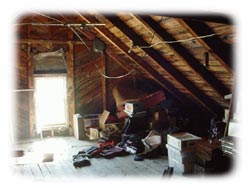
attic01


Children in the Attic


Father Andrew closes his article with the wonderful image of tiny rowboats, all bumping up against the great Ark of Salvation, the Church.  Allow me to suggest an alternative word picture.  I am reminded of the scene where a group of children stuck in the house on a rainy day, make their way to the attic.  Opening antique trunks they discover old dresses and clothes their ancestors wore years ago in the old country.  They put on the old clothes and pretend to reenact life in the old days.  The magic of the old days fills the attic for a brief moment on that rainy afternoon, but after awhile they tire of it and go downstairs to resume their “normal” everyday twenty first century life as before.  Before you know it, they will find another new fun hobby.  But for those of us who believe church history is the fulfillment of Christ’s promise in John 16:13 and who believe that ancient Church of yesterday continues in the Orthodox Church today we bid others to cross the Bosphorus with us.  We converted to Orthodoxy not because it’s coolbut because it’s true.

Robert Arakaki


See also

Robert Arakaki.  “Book Review: The Shape of Sola Scriptura.” OrthodoxBridge. 4 June 2011.

Robert Arakaki.  “Protestantism’s Fatal Genetic Flaw:  Sola Scriptura and Protestantism’s Hermeneutical Chaos.”  OrthodoxBridge.  3 January 2012.

Robert Arakaki.  “Crossing the Bosphorus.”  OrthodoxBridge.  15 January 2013.

Chris Armstrong.  “The Future Lies in the Past: Why evangelicals are connecting with the early church as they move into the 21st century.”  Christianity Today.  8 February 2008.

Holgrave.  “Hipster liturgists: or, Why I am an Episcopalian.”  Hipster Conservative.  25 August 2014.

Frederica Mathewes-Green.  “The Emerging Church and Orthodoxy.”  Precipice Magazine.   7 July 2007.

Keith Mathison.  “Solo Scriptura: The Difference a Vowel Makes.”  Modern Reformation. March/April 2007.

Steve Woodworth.  “How Hipsters Became More Powerful than the Gates of Hell.”  The Thursday Circle.  15 August 2013.


« Older posts Newer posts »