A Meeting Place for Evangelicals, Reformed, and Orthodox Christians

Category: Discipleship (Page 8 of 9)

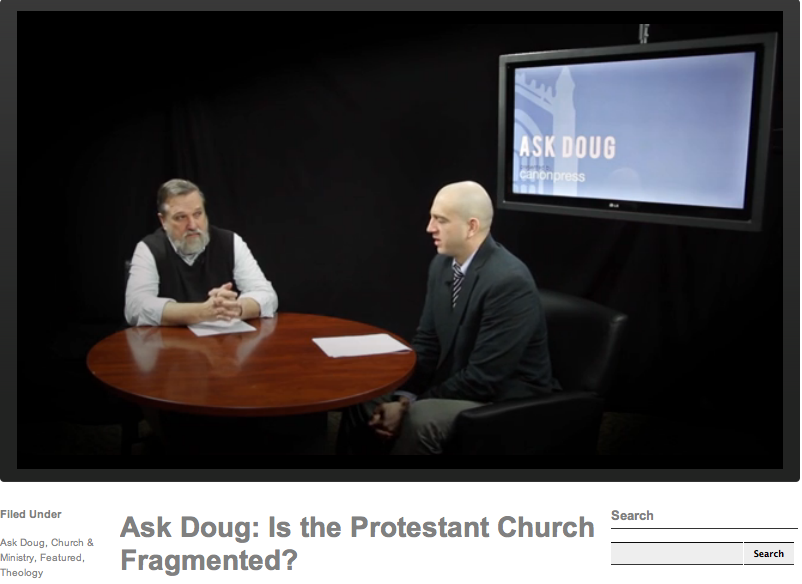
Is the Protestant Church Fragmented? A Response to Pastor Doug Wilson (2 of 2)


In a 26 January 2013 canonwired podcast, Pastor Doug Wilson was asked about the fragmented state of Protestantism.  One frequent objection to Protestantism is the fact that it has over 20,000 denominations.  Pastor Wilson responded that if you look at the data in terms of tradition as opposed to independent polities, you will find Orthodoxy has 19 different traditions, Protestants have 21 different traditions (streams), and for Roman Catholics there are 16 different traditions.  This answer gives one the impression that Protestants, Roman Catholics, and Orthodox are all in the same boat.

However, Pastor Wilson is confusing apples with oranges.  His 21 Protestant groupings are based on theological differences among Lutherans, Presbyterians, Baptists, Methodists, Pentecostals etc.  His 19 Orthodox groupings are based mostly on national jurisdictions, e.g., Greek Orthodoxy, Russian Orthodoxy, Bulgarian Orthodoxy etc.  National Orthodox jurisdictions are of a very different nature from doctrinal differences between Protestant denominations.

In this blog posting I will sketch Protestantism’s theological divisions.  Then I will compare its doctrinal disarray against Orthodoxy’s theological unity.


Baptism and the Lord’s Supper

One of the first major divisions occurred over the Lord’s Supper.  In 1529 Luther and Zwingli met at the Marburg Colloquy seeking to come to a common understanding of Christ’s words: “This is my body.”  Luther held to the real presence, while Zwingli preferred a more symbolic understanding.  Unable to come to an agreement the two went their separate ways.  Calvin held to a position somewhere between the two.

This difference over the real presence in the Lord’s Supper continues to divide Protestants.  Many Evangelicals and Baptists will side with Zwingli, while the more traditional or high church Protestants will side with Luther (if properly nuanced).  The significance of the Marburg Colloquy is that deep divisions emerged so soon among the original Reformers despite their adherence to sola scriptura.  Theological division is not a later development but present from the start.
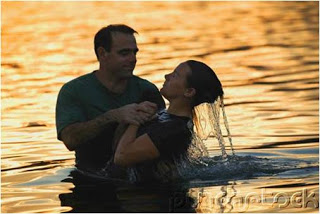
 

Baptism was another cause for division.  Lutherans and the Reformed Christians continued the practice of baptizing infants, while the Anabaptists rejected infant baptism insisting that only those old enough to understand the meaning of faith were to be baptized.  The Anabaptist movement began in 1523 in Zurich and spread to many parts of Europe.  The Baptists we know today can be traced to seventeenth century English Separatism.  Their refusal to recognize infant baptism or baptism by sprinkling divides the Baptists from more historic Protestants.  Some Protestants have experienced the pain of being excluded from Holy Communion at a Baptist church just because they had not been baptized by total immersion.  And those who wish to join a Baptist church will need to be rebaptized by total immersion.

Conclusion: The majority of Protestants reject Roman Catholicism’s seven sacraments for two sacraments: baptism and the Lord’s Supper.  The reducing of the number of sacraments to just two rather than promoting unity resulted in divisions among Protestants.


Church Government
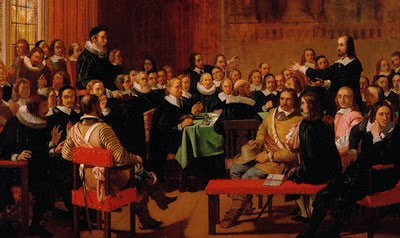
Westminster Assembly

Westminster Assembly

Under Elizabeth I the Anglican Church and the Via Media (Middle Way) was established in the mid 1500s.  Via Media was a compromise between Roman Catholicism and the more radical Protestants influenced by Calvin’s Geneva.  The English Puritans objected to the retention of the episcopacy and its close ties with the monarchy.  Two novel forms of church government emerged from this: presbyterianism and congregationalism.  Presbyterians believe that the local congregation is to be governed by presbyters (elders) elected by the people of a congregation or by a group of congregations.  Congregationalists reject the notion of a state church.  Following the “gathered church” principle, they insist that the church should consist only of those who responded to the call of Christ and who covenanted with Christ and each other to live as Christ’s disciples.


The Holy Spirit and Religious Revivalism
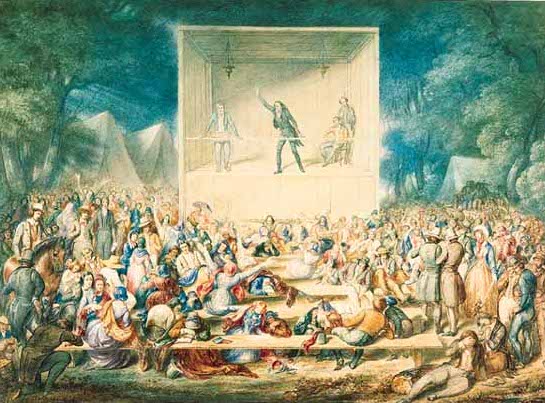
Frontier Revival in early 1800s

Frontier Revival in early 1800s

There is within Protestantism, especially Puritanism, a strong emphasis on a personal experience of God’s grace.  The Halfway Covenant controversy that troubled the New England colonies in the mid 1600s was over whether those who professed faith in Christ and lived upright lives but had had no conversion experience were to be admitted into full church membership.  In the mid 1700s there emerged a movement of New England Congregational preachers who insisted on the possibility of an instantaneous or sudden conversion experience attended by emotional and mystical features known as “New Lights.”  These were resisted by those who believed that faith in Christ did not require a dramatic experience and that the baptism administered to infants was efficacious provided that it was accompanied by diligent catechesis. In the mid 1800s John Williamson Nevin in The Anxious Bench criticized the emotional approach to religious conversion being popularized by the frontier revivals.  From the frontier revivals of the 1800s we see the origins of the emphasis being “born again” prominent among many Evangelicals and Baptists today.

Similar to the emphasis on instantaneous conversion was the emphasis on instantaneous or entire sanctification.  The Holiness movement which emerged in the mid 1800s sought to preserve John Wesley’s teaching that through a powerful instantaneous and emotional experience, distinct from the initial conversion, one who became cleansed from inbred sin was enabled to live without conscious or deliberate sin.  This emphasis gave rise to the Holiness Churches, the Church of the Nazarene, and many other smaller groups.

A new religious movement emerged from this emphasis on the Holy Spirit, Pentecostalism.  This movement which emerged at the turn of the century emphasized speaking in tongues as the sign that one had received the Holy Spirit.  Pentecostalism has exerted a wide and powerful influence on twentieth century Protestantism.  What was initially considered a bizarre sect in time became accepted in many mainline churches through the charismatic renewal.  Its expressive form of worship laid the foundation for the contemporary worship services found in many congregations.

We find here three quite different approaches to Christian conversion and faith in Christ: (1) the more traditional churches that accept infant baptism and view faith as trusting in Christ, (2) those who insist that becoming a Christian requires having undergone a distinct conversion experience and that baptism is only valid for those who had such an experience, and (3) those who believe that having a born again experience while necessary is not sufficient and that one needed to have received the baptism in the Holy Spirit with the sign of speaking in tongues.  These differences are more than doctrinal.  They touch upon the issue of who was a genuine Christian and who was not.  These questions generated strong emotions on both sides often resulting in church splits and new church groups being formed.


Liberalism Versus Fundamentalism

With the rise of modern science and the Enlightenment, Western Christianity faced a new challenge, knowledge based on autonomous reason.  The historical critical method of studying the Bible and the quest for the historical Jesus caused many to question and rethink traditional doctrines.  Many Protestant theologians, pastors, and denominational leaders began to jettison traditional beliefs like the divine inspiration and authority of Scripture, the Virgin Birth, the bodily resurrection of Christ, and even that of Jesus’ divinity!

This gave rise to theological liberalism, an attempt to forge a new theology compatible with the insights and findings of modern science.  Others resisted the attempt viewing naturalism as incompatible with the traditional Christian worldview.  This gave rise to conflicts between the theological conservatives that sought to hold on traditional doctrines and the theological liberals that sought to adapt theology to the new knowledge being generated by modern science.  In contrast to previous theological schisms that more or less remained within the confines of Christianity, theological liberalism resulted in many churches and denominations parting ways from the historic Christian Faith.

This is not to say that ‘conservative’ Protestantism resisted the temptation to syncretism.  The controversial ‘word of faith’, prosperity gospel, and holy laughter teachings, while immensely popular today have gone beyond the boundaries of historic Christianity.  The contemporary Christian music and the seeker friendly/church growth movement have taken much of Evangelical worship away from the historic pattern of Christian worship.  And ironically, in a post-modern reaction to the excesses of modern Evangelical worship the ancient-future movement surfaced in an attempt to reconnect with the ancient Christian tradition lost by modern Evangelicalism.


Protestantism and Orthodoxy Compared

In his attempt to describe Protestantism as consisting of 21 groupings or traditions, Pastor Doug Wilson glossed over the serious doctrinal divisions among Protestants.  This is where the contrast between Orthodoxy and Protestantism is most evident.

Core Doctrine – All of Orthodoxy share in the doctrines of the Trinity and Christology as defined by the Ecumenical Councils; Protestants, on the other hand, range anywhere from the classical Reformed and Lutherans who adhere to traditional Christology to the liberals who question or even reject the divinity of Christ or seek to redefine the Trinity using inclusive language – with more than a few denominations lying somewhere in between.

Worship – All of Orthodoxy carefully follow a select few ancient liturgies received from the historic Church; Protestantism has no common pattern or unity of worship.  Rather than rely on Tradition, they sought to create their own liturgies based on their reading of the Bible.  Protestant worship follows a broad spectrum from liturgical Anglican and Lutheran services, to sermon focused services characteristic of Evangelicals and Baptists, to the more emotionally expressive services among charismatics and Pentecostals.

Church Government – All of Orthodoxy agree that proper church government requires a bishop who is in apostolic succession; the vast majority Protestantism have no bishops in any historic sense.  Where the early Church only had one kind of polity: episcopal, Protestantism allows for all kinds: episcopal, presbyterian, and congregational.  In a disturbing development some of the Third Wave charismatic churches have claimed to have restored the office of the apostles!

Sacraments – All Orthodox share a common understanding of the historic sacraments.   They all affirm the real presence in the Eucharist.  There are different understandings about the need to baptize converts from Protestant and Roman Catholic churches.  Among Protestants there is no unity over infant baptism or the mode of baptism.  Neither is there a shared understanding about how often a church should observe the Lord’s Supper, the real presence, and who is authorized to celebrate the Lord’s Supper.

It has been claimed that Protestants do in fact enjoy Eucharistic unity.  But given the widespread belief that Holy Communion is just a symbol, intercommunion among Protestants has become all but disconnected from doctrinal orthodoxy and moral discipline.  In the glaring light of this fact, claims to Eucharistic unity among Protestants sound hollow to Orthodox Christians.

Conclusion: The sad fact is that Protestantism today has no unifying core beliefs, no shared pattern of worship, on top of its many denominations founded on these divisions.  From what I know of Pastor Wilson, he takes doctrine seriously.  However, he does his listeners a horrendous disservice by ignoring this scandalous reality.  What is compelling many Evangelicals to take a serious look at Orthodoxy is not merely the fractured state of Protestant theology and the widespread apostasy among liberal mainline denominations, but also the accelerating pace of doctrinal innovations among the younger generations of Evangelicals.


Protestantism’s Doctrinal Disarray

When I was a member of the liberal mainline United Church of Christ (UCC), a friend made a joke about the fact that if you walked into a room of 30 people at a UCC conference you would find 30 theologies in that room.  While intended to be humorous, the joke also underscored a very sad fact about the theological health of a denomination in decline.  Similar tensions have surfaced in the Episcopal Church and the Presbyterian Church (USA).

When I studied at Gordon-Conwell Theological Seminary the majority of the students there were conservative Evangelicals.  There was much common ground among us students but the sad fact was that there was no common worship life at Gordon-Conwell.  There was a chapel service but that was sparsely attended.  Once a month the students would meet with their fellow denomination members, but there was little interest in reconciling denominational differences during these meetings.

This is not to say that there are no differences among Orthodox Christians.  We differ over following the new church calendar versus the old church calendar of fast and feast days.  I have friends who attend an old calendar Russian Orthodox parish.  But while they celebrate Christmas two weeks later than the Greek Orthodox, I can receive Holy Communion if I were to visit that parish.   As far as multiple administrative jurisdictions in America, we all agree that it is contrary to canonical law.  I don’t know of any Orthodox bishop or priest who believe that multiple jurisdiction is God’s will.  Steps have been taken to prepare the way for another council.

The multiplicity of administrative jurisdictions has not destroyed or precluded the fundamental liturgical and Eucharistic unity among world Orthodoxy.  In Honolulu I attend the Greek Orthodox Church; on occasion I will visit the nearby ROCOR parish.  When I visit the mainland I usually attend an OCA or Antiochian Orthodox parish.  Also, we recently had an OCA priest who moved to Hawaii and was assigned to the local ROCOR parish and who would fill in for the Greek Orthodox priest when he went on vacation.  So those who point to the problem of multiple jurisdictions are overlooking the Eucharistic unity that we all share and our desire to live out our unity in Christ.

Schism can be healed.  When I became Orthodox in 1999, I was discouraged from visiting the Russian Orthodox Church Outside of Russia (ROCOR) parish.  This was because ROCOR saw the Moscow Patriarchate as collaborating with the Soviet regime and broke off ties with them. That schism was healed in 2006.   As far as the schism between Orthodox and Oriental Orthodox I remain cautiously optimistic.  Whenever I visit a nearby Coptic church I can sense of family resemblance that I do not have when I visit a Roman Catholic or Anglican parish.  One positive sign is that the Copts have been sending students to the Greek Orthodox Holy Cross Seminary.  Another positive sign of possible reconciliation is the fact Coptic Christians can receive the Eucharist at an Orthodox church when there is no Coptic church in the area.  This is an exception made on a case by case basis and requires the blessing of the bishop.

One could point to the various splinter Orthodox groups.  A Wikipedia article on Orthodoxy has three categories: (1) those in full communion, (2) traditionalist schisms, and (3) nationalist schisms.  The best way to deal with this complex situation is to ask: What do we mean by Orthodox unity?  Unity in Orthodoxy is organic and relational.  The Eucharistic unity that all Orthodox share in is not just in the body and blood of Christ, it is also a communion among Orthodox bishops around the world and goes back to the Apostles.  It is not enough for a church group to put the name “Orthodox” on its door; it must be in communion with the ancient patriarchates.  It is a sad and unfortunate fact that human nature being what it is has resulted in individuals and groups leaving the one holy catholic and apostolic Church.  But based on what the Nicene Creed teaches we believe that there has always been one Church, not two parts.  This view means that if one leaves the one holy catholic and apostolic Church, the Church remains intact but one has become outside the Church.  One way of locating this one holy catholic and apostolic Church is to see who is in communion with the ancient patriarchates.

There was a group of sincere Christians who called themselves the “Evangelical Orthodox Church.”  There is no patent, to my knowledge, on using the word “Orthodox.”  Similarly, there are many cults who call themselves “Christians.”  Yet as the Evangelical Orthodox grew in maturity and understanding, they learned that to be Orthodox in the historic sense meant entering into canonical communion with the historic Orthodox patriarchates.  So, they did.  (See chapter 10 “A Decade of Decision” and chapter 11 “Welcome Home!” in Peter Gillquists’ Becoming Orthodox.)

Inquirers will need to confront two questions: (1) Do I agree with the Nicene Creed’s “I believe in one holy catholic and apostolic Church?” and (2) Where do I find this one holy catholic and apostolic Church?  I don’t think they will find it in Protestantism.


Conclusion

When I entered into Orthodoxy I found a common faith and a common worship.    I close with two quotes: one from the second century church father, Irenaeus of Lyons, and another from a contemporary Orthodox blogger, Vincent Martini.  Irenaeus wrote:

Having received this preaching and this faith, as I have said, the Church, although scattered in the whole world, carefully preserves it, as if living in one house.  She believes these things [everywhere] alike, as if she had but one heart and one soul, and preaches them harmoniously, teaches them, and hands them down, as if she had but one mouth (Against Heresies 1.10.2, Richardson 1970:360).

Vincent Martini wrote:

An Orthodox Christian in America can travel to any Orthodox church in Greece, Russia, or Serbia, experiencing the same liturgy, prayer, and piety that they are accustomed to in their “home” church, while sharing full eucharistic fellowship with every single one of them. (“How Many Different Orthodox Churches Are There?”)

Despite the nearly two thousand years that separate Vincent Martini from Irenaeus of Lyons, we see the same Orthodox Faith.

When we compare Protestantism against Orthodoxy we will find that very little has changed with respect to Orthodoxy.  Orthodox unity is based on the stability of Holy Tradition.  All Orthodox share the same core doctrines, the same worship, and the same Eucharist — as did our Fathers in the centuries before us – and as will our grandchildren in the generations to come.  But Protestantism is not grounded in the stability of Holy Tradition but in the quest for a reformed church ever reforming.  This has resulted in constant change and flux from the time of Luther and Calvin till now.  Neither the most historic high church denominations nor its low church evangelical or charismatic counterparts will be able to guarantee that its grandchildren will worship or believe as they did.

Robert Arakaki

 

The Orthodox Priest’s Toolbox for Pastoral Care


toolbox-1


An Orthodox Response to Spencer Boersma’s “The Impotence of Calvinism?” (2 of 2)    (1 of 2)

This week’s posting is a continuation of my response to Spencer Boersma’s “The Impotence of Calvinism.”  In this posting I will be looking at how an Orthodox priest might approach Young Man’s problem differently.


The plight of Boersma’s Reformed pastor is that his tool box is a limited one.  An Orthodox priest has a much fuller array of tools available to him.


The Divine Liturgy


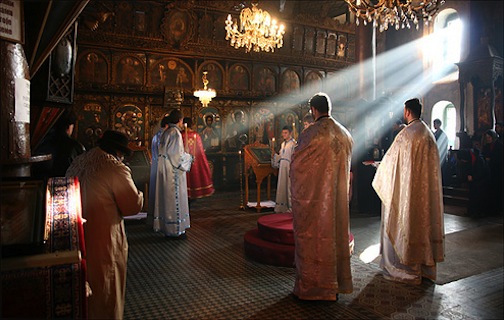
Consistent attendance at weekly Sunday Service is foundational for Orthodox spirituality.  The Liturgy provides focus and power to our individual spirituality.  It shapes our hearts and minds as we participate in the prayers and hymns.  It is not just a nice Sunday service.  For the Orthodox it begins with the Vespers service at Saturday sundown followed by Matins and the Liturgy on Sunday morning.  Standing throughout the Liturgy, singing the hymns, paying attention to the prayers, and keeping the pre-Communion fast (no food or drink after midnight) comprise a regime of spiritual disciplines far more demanding than many Protestant services today.  Liturgical worship is radically different from the feel good spiritual high of mega churches or the lengthy sermon centered services of traditional Protestantism.

I like to think of the Liturgy as a spiritual nuclear reactor; if one stands in the radiation field one gets irradiated or energized by the Divine Presence.  There are two key moments in the Liturgy: the reading of the Gospels in which we hear the words of Christ, and the Eucharist in which we feed on the Body and Blood of Christ.  The Eucharist in the early Church was not viewed as symbolic reminders but as “the medicine of immortality.”  In the pre-Communion prayer by John Chrysostom we read:

Seeing the divine blood, have fear, O man, for it is coal that burns the unworthy.  It is God’s body that deifies and nourishes me; it deifies the spirit and nourishes the mind mystically.

Loving Master, Lord Jesus Christ, my God, do not let these Holy Things be to my condemnation because of my unworthiness, but rather for purification and sanctification of my soul and body, and as a pledge of the life and kingdom to come.  For it is good for me to cleave to God, and to place the hope of my salvation in the Lord.

This understanding of the real presence in the Eucharist is radically different from what many Protestants are accustomed to, even for the Reformed Christians who affirm the real presence in the Lord’s Supper.


Confession

Orthodox Confession

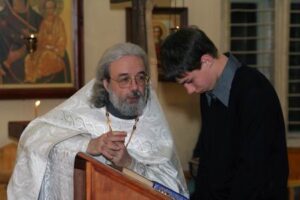
This is probably the most potent tool that the Orthodox priest has that the Reformed pastor does not have.  If the Young Man were to ask: “Father, why did I sin?”  The priest can reply: “Let us go before God in prayer and we will deal with your sin problem in the sacrament of confession.”  In the Orthodox approach to confession one usually stands or kneels before the icon of Christ with the priest standing at one’s side.  To use Evangelical language the Orthodox priest and the penitent go in prayer to the foot of the Cross, and there the penitent confesses his sins to Jesus Christ directly.  The priest is a bystander acting as a witness.  In the sacrament of confession the priest prays:

O God our Saviour, who by thy Prophet Nathan didst grant unto repentant David pardon of his transgressions, and didst accept Manasses’ prayer of penitence: Do thou, with thy wonted love towards mankind, accept also thy servant, N., who repenteth him (her of the sins which he (she) hath done, pardoning his (her) offences, and passing by his (her) iniquities.  For thou hast said, O Lord: With desire have I desired not the death of a sinner, but rather that he should turn from the wickedness which he hath committed, and live; and that even unto seventy times seven, sins ought to be forgiven.

By speaking out loud the sin, the penitent is bringing the sin out from the shadows of shame and secrecy into the light of humility and faith.  Confession is also an opportunity for healing and coaching.  Oftentimes the priest will give the penitent Christian advice about how to strengthen their spiritual life and live a life pleasing to God.  Going to confession is often an uncomfortable experience because it involves baring one’s soul to the priest.  This is similar to the discomfort one feels when one undergoes a physical examination by the physician.  Frederica Mathewes-Green in At the Corner of East and Now (p. 65) wrote:

Preparing to go to confession can be stressful; one feels awkward and embarrassed to say some things aloud.  But saying them, and then hearing them forgiven, turns out to be surprisingly liberating.  It’s freeing to have no secrets and to know that one’s most shameful moments are seen, known, and forgiven by God.  Receiving this forgiveness through the priest, hearing the words aloud, contributes to a sense of permanency and reliability; its’ not just you talking to the bedroom ceiling.  As my husband says, on the way in people say, “I hate confession!”  On the way out they say, “I love confessions!

The Orthodox understanding is that when we come to faith in Christ and are born anew in the sacrament of Baptism all our sins have been forgiven.  In baptism all our previous sins have been forgiven but not future sins.  Because they have not yet happened these sins are hypothetical.  But when they become real then they need to be dealt with through repentance and confession.


Fasting

The Weekly Fasts.  All Orthodox Christians are expected to keep the Wednesday and Friday fasts.  The weekly fasts consists primarily of abstaining from meat, fish, and dairy products.  This is an ancient spiritual discipline which dates back to the early church.  According to the first century Christian document, Didache 8:1, the Christian fasts are a continuation of the Jewish biweekly fasts.  This makes for spiritual discipline as a corporate endeavor, something the Church does together than an individual affair.

Fasting has for the most part been discarded by Protestants.  They shy away from fasting out of fear of works righteousness or if they do endorse fasting, they stress that you do it on your time in your own way.  But for the Orthodox fasting is a way of denying the desires of the flesh and of submitting to Christ.  It is also a way of strengthening our souls.  For many Christians our inner life is in disarray like an exhausted mom whose house is taken over by unruly children, or like the owner of a dog who is pulled along by the dog instead being the master.  Oftentimes a priest will prescribe a fasting regime for persistent sins.  By learning to control the desires of our stomachs we learn to control the other desires (passions) becoming rational beings no longer swayed by our feelings and wants.

Fasting is a powerful tool for dealing with situations where demonic influences are involved (see Mark 9:29 NKJV).  Pope Leo the Great, a fifth century church father, wrote:

Therefore abstaining from food and drink, they [the Jews] applied the discipline of strict correction to themselves, and in order to conquer their foes, first conquered the allurements of the palate in themselves.  And thus it came about that their fierce enemies and cruel taskmasters yielded to them when fasting, whom they had held in subjection when full.  And so we [the Christians] too, dearly beloved, who are set in the midst of many oppositions and conflicts, may be cured by a little carefulness, if only we will use the same means [fasting].  For our case is almost the same as theirs, seeing that, as they were attacked by foes in the flesh so are we chiefly by spiritual enemies.  (“Sermon XXXIX.I On Lent” Sermons of Leo the Great.  NPNF Second Series Vol. XII p. 152)

Relying, therefore, dearly-beloved, on these arms, let us enter actively and fearlessly on the contest set before us; so that in this fasting struggle we may not rest satisfied with only this end, that we should think abstinence from food alone desirable.  For it is not enough that the substance of our flesh should be reduced, if the strength of the soul be not also developed. (“Sermon XXXIX.V On Lent” Sermons of Leo the Great.  NPNF Second Series Vol. XII p. 153)

Abstaining from food makes little sense in a religious tradition like Calvinism that puts the emphasis on the intellect, but fits in well with a religious tradition like Orthodoxy that has a more holistic view of the human person.  I would urge my Calvinist friends to give thought to the mind-body separation that seems to pervade their worldview.  This theological outlook is at odds with the more integrated and holistic spirituality of the early Christians.


Boston Marathon

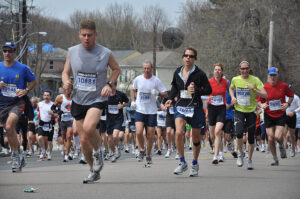
Great Lent.  For me the transition from popular Evangelicalism to Orthodoxy was a lot like a couch potato joining a family of athletes.  If the twice a week fasts are like a routine morning jog, Orthodoxy’s 40 days of fasting in Orthodoxy is like the Boston Marathon or the Hawaii Ironman Triathlon.


Great Lent is a time of fasting, prayer, and almsgiving.  In addition to the fasting are the midweek church services.  It can be a tremendous challenge for many but they end up spiritually stronger.   Under the spiritual regimen of Calvinism, the Young Man would become more developed intellectually but remain undeveloped in other areas of his life.  Under the holistic approach of Orthodox Great Lent the Young Man will be challenged not only in his intellect, but also in his heart and his relationship with the Church and with those in need outside the Church.


Pocket-Prayer-book-black__50622_zoom

Prayer.  Personal devotions are valued in both the Protestant and Orthodox traditions.  In contrast to Protestantism’s emphasis on extemporaneous prayer, Orthodoxy values liturgical prayers.  It also values prayers composed by the saints.  The value of using these prayers are much like a beginning pianist imitating the great composers.  Orthodoxy also has available for its members prayer books that contain the Morning Prayer and the Evening Prayer, and prayers for other occasions.  One of the more popular prayer book is the tiny pocket prayer book sponsored by the Antiochian Archdiocese.  In addition there are: A Manual of Eastern Orthodox Prayer and My Orthodox Prayer Book.  For those interested in the Slavic tradition, there are the Orthodox Prayer Book (Jordanville) and the Old Orthodox Prayer Book (Russian Old Believer).


Prayer Rope

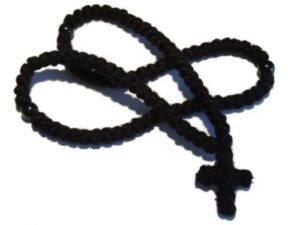
Probably the most characteristic example of Orthodox spirituality is the black knotted prayer rope and the Jesus Prayer.  Orthodox Christians will say: “Lord Jesus Christ, Son of God, have mercy on me” at each knot.  The constant saying of the Jesus Prayer will etch the prayer onto our hearts and mind reshaping our inner man.


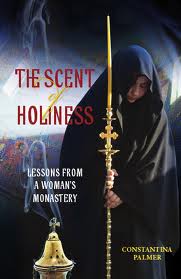
Monasticism.  If the Orthodox parish priest is like the family doctor, the monastery is like the Mayo Clinic of Orthodox spirituality.  Orthodox monastics devote their lives to prayer much like the way pro football players devote their lives to athletic excellence.  Thus, if an Orthodox priest finds himself with a difficult pastoral challenge he has the option of recommending the Young Man do a pilgrimage to a monastery.  Many Orthodox Christians go to a nearby monastery for a personal retreat and for spiritual direction.  Contemporary accounts of pilgrimages to Orthodox monasteries can be found in Touching Heaven: Discovering Orthodox Spirituality on the Island of Valaam (2003), The Mountain of Silence: A Search for Orthodox Spirituality (2002), and The Scent of Holiness: Lessons From a Women’s Monastery (2012).

The Calvinist pastor on the other hand pretty much operates like an independent physician who has no nearby hospital to rely on.  Thus many Reformed pastors, if they ever run into especially difficult pastoral cases, are pretty much on their own.  They might be able to consult with fellow pastors or with their seminary professors but that is about it.

In our modern and post-modern culture saturated material excess and framed by materialistic worldview, we have largely lost the place and importance of the monastery and monastic life for Christian spirituality. This neglect is evident even in many Orthodox parishes. Yet in many Protestant settings the subject of monasticism and the monastic lifestyle is subject to scorn and ridicule.  Instead of visiting monasteries, many Protestants attend conferences or go on cruises where they hear inspiring talks.  This situation is tragic.  We need to awaken to the widespread spiritual poverty in our midst to recognize the important role monasteries play in supporting the spiritual vigor of the larger Church.


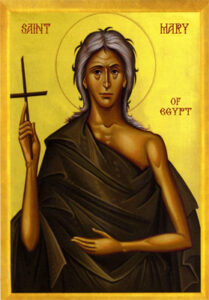
Lives of the Saints.  In every Sunday service the Orthodox Church commemorates saints of the day.  During the Matins service which precedes the Divine Liturgy excerpts from the lives of the saints are read.  These are in part a lesson in church history but are also a celebration of the Holy Spirit’s work in a person’s life.  One of the more conspicuous examples of this is the story of Saint Mary of Egypt whose life story is recounted on the fifth Sunday of Lent.  Athanasius the Great Life of St. Anthony is an early classic about a great desert father.  The Prologue of Ohrid is a multi-volume series of the lives of Orthodox saints.


Protestantism’s neglect of the lives of the saint is partly due to its rugged individualistic mindset.  We will live the Christian life our own way: “No one tells me what to do!”  Our fear of “ancestor worship” has resulted in a huge gap in church history among Protestants.  Instead of being rooted in history, many Protestants today are enamored with their favorite modern theologians or radio preachers but are woefully ignorant of their rich Christian heritage.  When I need examples for combating the passions of the flesh I reflect on John the Baptist and Saint Mary of Egypt.  I can also find spiritual wisdom in the great spiritual classic The Ladder of Divine Ascent by Saint John of the Ladder.  Many people also find great value in the Philokalia, a compilation of texts by spiritual masters from 300 to 1400.  The wisdom of these books become even more useful if used in conjunction with the guidance of a wise father confessor (spiritual director).


Summary

The predicament of Boersma’s Young Man is common across Christian traditions.  However, theological paradigms greatly influence the responses the pastor or priest will make.  Boersma’s hypothetical dialogue illustrates some of the limitations and constraints of Reformed theology.  Orthodoxy on the other hand does not agonize whether one is part of the elect.  Instead it takes a more direct and practical approach to the problem of living a holy life.  Orthodoxy is full of ancient wisdom expressed in song and teachings, historical examples of courage and humility, a framework for worship.  Orthodoxy draws on Holy Tradition and a host of spiritual tools and disciplines handed down to us from the early Church.  What I have tried to do is show how Orthodoxy provides a more holistic and effective course of treatment for problem of sin.  For those spiritually wounded and struggling to live holy lives the Orthodox Church says: Come and see!  Come to the spiritual hospital for the healing of your souls.

 Robert Arakaki

The Power of God’s Mercy: An Orthodox Response to Spencer Boersma’s “The Impotence of Calvinism?” (1 of 2)


"The Impotence of Calvinism?" by Spencer Boersma

“The Impotence of Calvinism?” by Spencer Boersma

 Spencer Boersma posted “The Impotence of Calvinism?” on After Orthodoxy?  In it he presents a hypothetical conversation between a Young Man and his Calvinist pastor about his struggle to live a holy life and God’s preservation of the elect.

Here is a partial excerpt of the conversation.


YM: A Young Man turned to his pastor and said, “Pastor, why did I sin?”

P: “Because you did not obey God, son,” the Pastor replied.

YM: “But this time it was like I could not stop myself, no matter how hard I tried. Pastor, am I responsible for the sins that I do that are out of my control?”

P: “Why yes. After all, you did them. You are always in control. You never have an excuse.”

YM: “But Pastor, don’t you say in your sermons that God is sovereign. God is in control, not me?”

P: “Yes he is, always. So, you should ask him for the strength to obey.”

YM: “I did and he didn’t give me the strength this time…”

P: “…I don’t think that is what happened. He probably did provide and you did not act on that provision.”

YM: “Well, maybe. But if that is the case, why did he cause me not to act on it? Why did he not give me the strength to act on the strength that he gave?”

P: “What? No. No. No. You are confused. You do not understand. God does not cause you to sin. You do.”

YM: “But I thought you said he was sovereign over everything, that he causes all things?”

P: “Yes, but not that.”  

More

One troubling aspect about the dialogue is that the pastor is so busy debating theology with a member of his flock that he fails to practice the healing of souls.  It seems that the pastor is applying rigorous logic when mercy and compassion are what the Young Man so desperately needs.   The dialogue ends in both sides frustrated and at an impasse.  This pastoral impasse is rooted in a theological conundrum that lies at the heart of Reformed theology – its monergistic approach to salvation.  Boersma writes:

Of course, with our classical Calvinistic circles, this question cannot be answered without, as we see with the pastor, getting rather frustrated and upset. Even then, no helpful answer is really given that would comfort the young man in the despair of his sin. Does God love me as a disobedient sinner? Does [God] not love me enough to destroy the sins that have enslaved me? The answer, for the Calvinist, is left shrouded in terrifying mysticism, paralyzed the inability for the Calvinistic account of God to answer the question of whether or not God has truly elected a person to salvation (emphasis added).

Boersma closes with a quote from Isaiah 63:15-17 in which the prophet asks why God has hardened the hearts of the Israelites.  While this verse may bring some comfort to the troubled Young Man, it still does not address the theological roots of his problem.  Many Reformed pastors or theologians take a different tack counseling: “Do not concern or trouble yourself with God’s eternal decrees or election.  Your duty is to ‘trust and obey,’ to be faithful to ‘those things that have been revealed’ (Deuteronomy 29:29).”

In this blog posting I will: (1) discuss the Reformed perspective on the Christian life and (2) present the Orthodox perspective on the Christian life.  Then in the next blog posting I will describe the different approach an Orthodox priest might take to the Young Man’s predicament.


The Reformed Perspective – Christian Life as Imparted Grace to the Elect

John Calvin

John Calvin

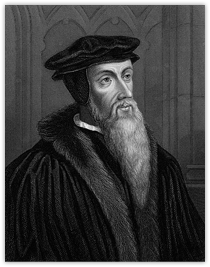
The foregoing dialogue is really about the Reformed doctrine of the preservation (perseverance) of the saints.  The pastor faithfully and accurately reflected Calvin’s teaching on the Christian life.Calvin wrote:

For perseverance itself is indeed also a gift of God, which he does not bestow on all indiscriminately, but imparts to whom he pleases.  If one seeks the reason for the difference–why some steadfastly persevered, and others fail out of instability–none occurs to us other than that the Lord upholds the former, strengthening them by his own power, that they may not perish; while to the latter, that they may be examples of inconstancy, he does not impart the same power (Institutes 2.5.3; Calvin 1960:320, emphasis added).

According to Calvin, if one belongs to the elect one will have received divine grace (power) to resist sin, but for those not part of the elect God in his inscrutable wisdom has withheld his grace from them.  The element of our human response or struggle to live holy lives has no part in Calvin’s monergistic understanding of salvation.  Based on what Calvin wrote the Young Man has reason to be concerned about his salvation.

This has led to Reformed theologians devoting considerable energies to addressing this problem by asserting the possibility of the certainty of salvation.  The Westminster Confession of Faith teaches:

This perseverance of the saints depends not upon their own free will, but upon the immutability of the decree of election, flowing from the free and unchangeable love of God the Father; upon the efficacy of the merit and intercession of Jesus Christ, the abiding of the Spirit, and of the seed of God within them, and the nature of the covenant of grace: from all which arises also the certainty and infallibility thereof. (Chapter XVII.2; emphasis added.   See also Chapter XVIII and the Westminster Larger Catechism Q. 80)

The Westminster divines underscored the divine decrees and the denial of human free will before addressing the assurance of salvation.  What I find problematic about the Reformed position on the assurance of salvation is the extreme language used.  The unqualified use of “certainty” and “infallibility” seems to imply that they have X-ray vision capable of discerning the inscrutable will of God.  The Orthodox position is that the eternal destiny of individuals is a mystery but that we put our confidence in God’s goodness and mercy.


The Orthodox Perspective — Christian Life as Struggle and Journey

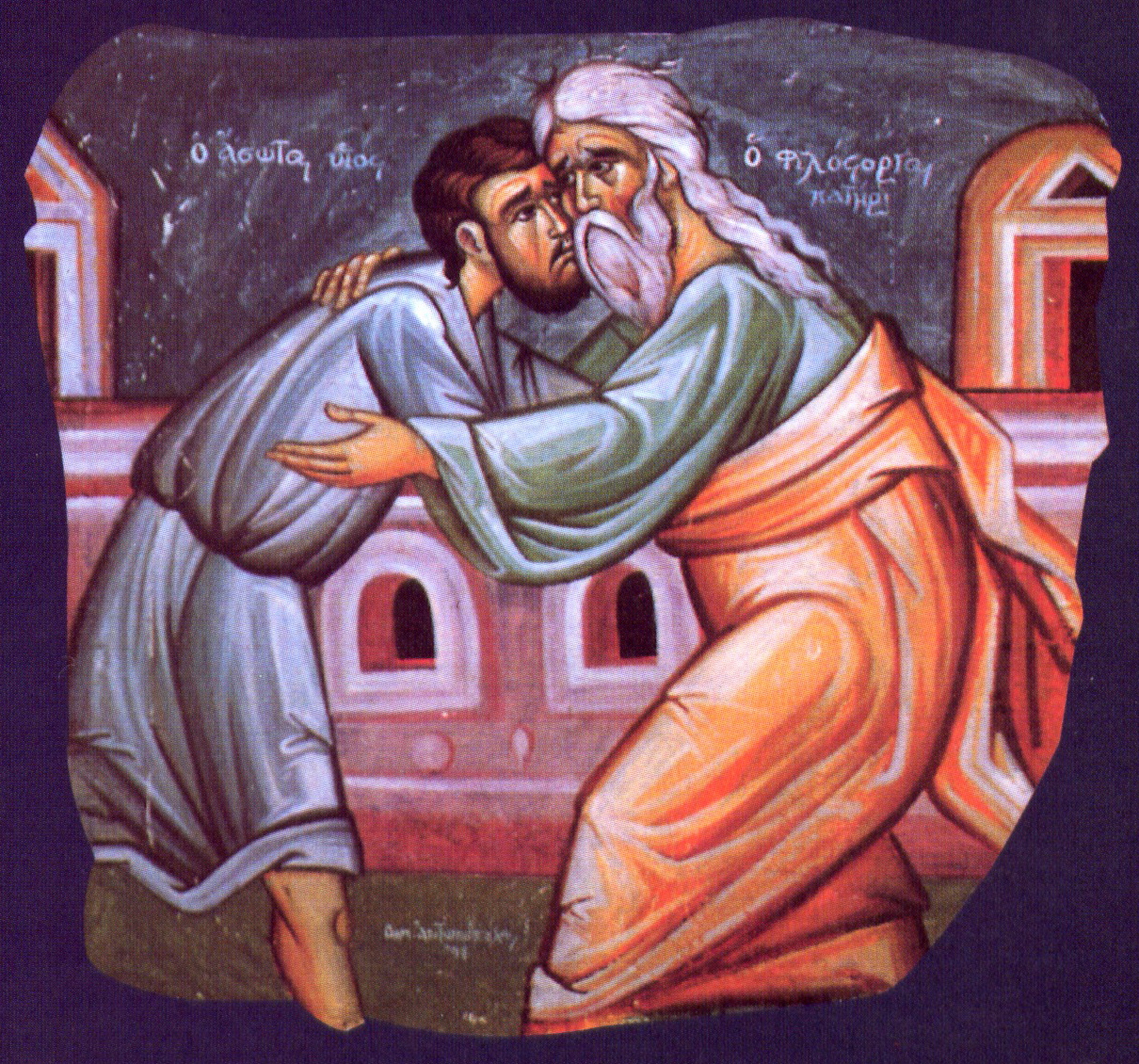
prodigal-sonGod’s mercy is foundational for Orthodox spirituality.  God in his mercy will welcome back the repentant sinner.  In the Sunday Liturgy one hears repeatedly: “Lord have mercy!”  Orthodox Christians are en-couraged to cultivate a heart of repentance by saying repeatedly the Jesus Prayer: “Lord Jesus Christ, Son of God, have mercy on me, a sinner.”  Consistent attendance at the Sunday Liturgy will give one a growing awareness that God is not so much the stern judge as He is the merciful father waiting for the prodigal to return home.

Orthodoxy understands the Christian life as one of struggle, even holy warfare against the world, flesh and devil.  Having been born to new life in Christ we are currently engaged in a daily struggle against the passions of the flesh, our fallen human nature.  The Christian life is a repeated cycle of us walking, our falling flat on our faces, and our getting up again, etc.  Therefore, an Orthodox Christian is not surprised by our falling into sin like the Young Man.  Orthodox Christians do not agonize over our salvation, nor do we inquire into our eternally decreed election.

This emphasis on divine mercy lays the foundation for the Orthodox teaching on synergy – we freely co-operate with God in our salvation.  This view lies somewhere between the extremes of Calvinism and Pelagianism.  Unlike the Pelagian heresy which assumed that man possessed the innate ability to live righteous lives, the Orthodox approach is that we need God’s grace given through the sacramental life of the Church.  And unlike Calvinism which assumes that we are totally depraved and incapable of doing good unless God acts on us, we have the capacity to respond to God’s invitation to enter into his kingdom.

We avail ourselves of God’s grace in the Mysteries (sacraments) of the Church.  The church services in combination with the spiritual disciplines prescribed by the Church comprise a therapeutic regimen designed to restore us to spiritual health.  Through them we learn to pray, to be still before God, to deny the passions of the flesh, to acquire wisdom, in short we attain “the whole measure of the fullness of Christ” (Ephesians 4:13).  This is not works righteousness but rather a synergistic process in which we are transformed by the Holy Spirit into the likeness of Christ.

We begin our Christian life with a wounded heart but over time through our following the Orthodox way of life, our hearts become stronger, more rational, and purified.  Kallistos Ware wrote in The Orthodox Way:

The first stage, the practice of the virtues, begins with repentance.  The baptized Christian, by listening to his conscience and by exerting the power of his free will, struggles with God’s help to escape from enslavement to passionate impulses.  By fulfilling the commandments, by growing in his awareness of right and wrong and by developing his sense of ‘ought’, gradually he attains purity of heart…. (p. 141)

Over time our struggle to follow God’s commandments becomes easier as we become accustomed to doing God’s will and putting aside the passions of the flesh.  What was alien to our fallen nature becomes over time natural to our new nature in Christ.


Christian Discipleship and Eschatology

Orthodoxy views the Christian life as preparation for the inevitable encounter with Jesus Christ at the final judgment.  The Orthodox understanding that there is a connection between our spiritual condition and our eternal destiny was echoed by CS Lewis in his essay “Weight of Glory.”

It is a serious thing to live in a society of possible gods and goddesses, to remember that the dullest and most uninteresting person you can talk to may one day be a creature which, if you say it now, you would be strongly tempted to worship, or else a horror and a corruption such as you now meet, if at all, only in a nightmare.  All day long we are, in some degree, helping each other to one or other of these destinations.

Every day we make choices that lead us in one of two directions: towards God and his kingdom or away from God and into the darkness of hell.  Every year just before Great Lent commences the Orthodox Church celebrates the Sunday of the Last Judgment in which the parable of the sheep and the goats is read out loud (Matthew 25:31-46).  Unlike some Christian circles that devote considerable amount of time and energy into speculation about the end times, the Orthodox Church uses this parable to remind us that even the normal everyday acts of charity can have eternal consequences.

This preparation for the final judgment takes place not just on the Sunday of the Last Judgment but throughout the year.  Every Sunday in the Completion Litany Orthodox Christians pray:

That we may live out our lives in peace and repentance, let us ask of the Lord.

Following that, we pray for:

A Christian end to our lives, peaceful, free of shame and suffering, and for a good defense before the dread judgment seat of Christ, let us ask.

We prepare for the final judgment by living lives of peace, repentance, and piety.  Orthodox Christians also anticipate and prepare for the final judgment in the Morning Prayers.  An excerpt from one Morning Prayer often used by the Orthodox reads:

When I am being judged, do not allow the hand of the prince of this world to take hold of me, to throw me, a sinner, into the depths of hell, but stand by me and be a savior and mediator to me.  Have mercy, Lord, on my soul, defiled through the passions of this life, and receive her cleansed by penitence and confession, for you are blessed to the ages of ages.  Amen.  (Prayer of Saint Eustratios)

Our confidence is not in our good works but in the mercies of God.  In anticipation of the final judgment we trust Christ to protect us from Satan’s accusations, to heal our souls, and to purify our hearts through the sacrament of confession.

The words “theosis” or “deification” are often used to explain the Orthodox understanding of salvation.  What may strike inquiring Protestants as a bizarre concept is really another way of referring to becoming mature or perfect in Christ, that is, like Christ (II Peter 1:4, I John 3:2, Romans 8:29).  The promise of the Christian life is not just the forgiveness of sins but the restoration of the imago dei within us.  The Orthodox Church believes that our ongoing sanctification will culminate with our glorification at the Second Coming of Christ.


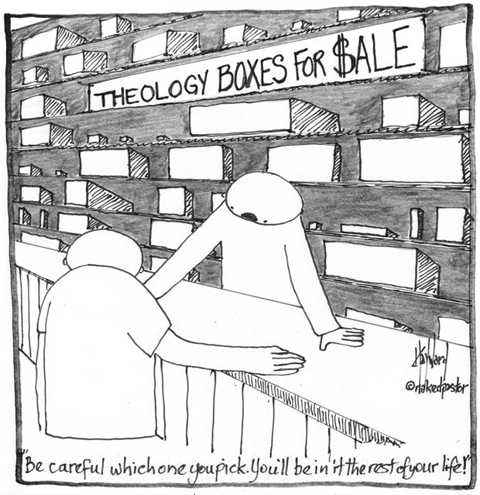
theology boxes by Naked Pastor

theology boxes by Naked Pastor

Theology Boxes We Live In

While the forensic understanding of salvation (the forgiveness of sins) can be found in both the Reformed and Orthodox traditions, the forensic paradigm is given pride of place in Reformed soteriology.  The prominence of the penal atonement theory is such that it overshadows other paradigms of salvation.  While Orthodoxy does accept the forensic understanding of salvation, it takes a broader and more inclusive approach.  In addition to salvation as the forgiveness of sins, Orthodoxy also stresses salvation as the healing of the soul, denying the passions of the flesh, and militant resistance to the Devil.

Medical Paradigm.  As a result of the Fall the human soul has become diseased and wounded.  In the ESV translation of Jeremiah 17:9 we read: “The heart is deceitful above all things, and desperately sick; who can understand it?”  Jesus taught that the evil thoughts emerging from men’s hearts make them unclean (Mark 7:20-23).  David in Psalm 51 prayed: “Create in me a pure heart, O God, and renew a steadfast spirit within me.”  Thus, our salvation requires the restoring of our disordered inner state to the integrity and wholeness that God intended for us.


Icon – Good Samaritan by Marice

Jesus often described salvation using medical terms.

It is not the healthy who need a doctor, but the sick.  I have not come to call the righteous, but sinners.  (Mark 2:17)

Probably the best known example of the medical paradigm is the parable of the Good Samaritan (Luke 10:30-35).  In this story a certain traveler fell into the hands of robbers who beat him and left him half dead.  Later in the story the Good Samaritan came to the injured traveler, bandaged his wounds, poured oil and wine on the man’s wounds, then took him to an inn.  The traveler falling into the hands of robbers can be understood as humanity falling into the clutches of the Devil and his demons who ravaged his soul.  The Good Samaritan pouring oil and wine on the man’s wounds is a reference to the sacraments of baptism, chrismation, and the Eucharist.  The inn is a reference to the church as a spiritual hospital.  This picture of humanity as the victims overcome by demons and rescued by God’s mercy is quite different from the legal paradigm which depicts humanity as guilty criminals standing before a stern judge.

Metropolitan of Nafpaktos Hierotheos in Orthodox Spirituality noted that Protestants’ understanding of faith as theoretical acceptance of God’s revelation has resulted in the absence of the therapeutic approach (p. 28).  He finds a similar lack in the Roman Catholic tradition:

In deed we cannot find in all of Latin tradition the equivalent of Orthodoxy’s therapeutic method.  The nous [mind] is not spoken of; neither is it distinguished from reason.  The darkened nous is not treated as a malady and the illumination of the nous as its cure.  Some greatly publicised Latin texts are sentimental and go no further than sterile moralising (pp. 29-30).

Orthodoxy has a deeper understanding of salvation and the healing of our souls that I have not seen in Protestantism.  Metropolitan Nafpaktos wrote:

What is healed first and foremost is a person’s heart, which constitutes the centre of his entire being.  In other words, it is not just the visible signs of illness that are treated, but also the inner self, the heart.  When a person’s nous is sick, it is dispersed and scattered among created things through the senses, and is identified with the rational faculty.  This is why it must return to dwell within the heart, which is the work of Orthodox spirituality.  The Orthodox Church is referred to as a Hospital, a place of healing for the soul, for this reason (pp. 98-99).

The Orthodox Church, however, does not just stress the necessity of healing; it also outlines the means by which it can be achieved.  Because a person’s nous and heart are impure, he must pass successfully through the three stages of growth in the spiritual life: purification of the heart, illumination of the nous and deification.  Orthodoxy is not like philosophy.  It is more closely related to the applied sciences, particularly medicine (pp. 99).

The Strong Man Paradigm.  The Calvinist paradigm assumes that failure to keep God’s law is the result of willful disobedience, not inability.  To view sin as the condition of being willing but lacking the ability to keep God’s law – involuntary sin — is for Reformed Christians a contradiction of terms.  The Orthodox understanding of sin is broader and subtle going beyond just conscious and willful forms of sin.  Below is an excerpt from a pre-Communion prayer composed by John Chrysostom, a fourth century church father, which reflects a more complex understanding of sin:

Wherefore I pray thee: have mercy upon me and forgive my transgressions both voluntary or involuntary, of word and of deed, of knowledge or of ignorance; and make me worthy to partake without condemnation of Thine immaculate Mysteries, unto remission of my sins unto life everlasting.  Amen.  (Emphasis added.)

Orthodoxy does not assume like Protestantism that one already has the ability, that what is needed is needed is right understanding which comes from Bible reading and attentive listening to the pastor’s sermon.  The Orthodox understanding of sin is that our will and soul have been weakened by the Fall.  Our disordered inner state has resulted in our wills lacking the unhindered ability to control our bodies and our desires.  Orthodox spirituality also takes into account the external reality of demonic forces.


Christus Victor

Orthodoxy recognizes that as a result of the Fall humanity has come under the dominion of Satan much like a young kid coming under the grip of the neighborhood bully.  Jesus taught:

In fact, no one can enter a strong man’s house and carry off his possessions unless he first ties up the strong man.  Then he can rob his house.  (Mark 3:27, NIV)

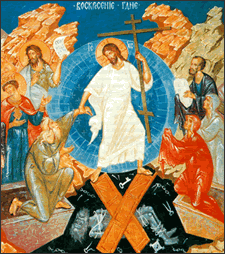
Here Jesus is describing himself as the hero who breaks into a neighborhood bully’s house and rescues all the stolen goods from the bully’s house.  When Adam and Eve listened to the Devil’s words and rejected God’s words they came under Satan’s domination.  The human race remained in bondage to the Devil until Christ defeated him on the Cross.  The Christus Victor motif is a prominent theme in the Orthodox celebration of Easter.  Where Orthodoxy celebrates Christ resurrection as the decisive defeat of the Death and the Devil, Western Christianity puts the emphasis on Christ’s suffering on the Cross to atone for our sins.  The principal problem in the Western paradigm is God’s wrath against sinners, not man as weakened wounded hostages in bondage to the Devil.

The Strong Man paradigm can be seen in the Orthodox approach to baptism in which one must renounce Satan three times then three times confess Jesus as Lord.  This act of renunciation and confession is critical for our salvation.  Christian conversion is not simply agreeing with some theological concepts which is characteristic of Protestantism, but faith as trust and submission to Christ.  Through baptism our citizenship in the kingdom of God is restored and we come under Christ’s lordship and blessing.


The Christian Life as Transformation by Divine Grace

The overpowering desire alluded to by the Young Man was probably his sexual desires.  Rather than view human sexuality in terms of behavior, Orthodoxy views human sexuality in terms of inner energies and thoughts that give rise to action.  In the modern spiritual classic The Mountain of Silence, Fr. Maximos tells Kyriacos Markides how a life devoted to prayer can transform our sexual drive.

“Woe to those monks and nuns,” Father Maximos went on after we stopped laughing, “who shovel into their subconscious their sexual passions.  In such a state they would tremble and sweat in the presence of the opposite sex.  There is no spirituality in that.  What happens, and what we aim at, is the transmutation of erotic energy from earthly attractions to God, the way human beings were in their primordial natural state.”

“Eros turns into agape,” I muttered.

“Right.  Such persons love all human being without distinction to their sex.  Such persons do not have much to do with what belongs to the after-the-Fall state of humanity.  Do you understand?  The love of God totally transforms human beings through Grace.  (from Mountain of Silence p. 144)

Fr. Maximos described how authentic spirituality takes us beyond external legal righteousness that plagued the Pharisees (see Matthew 5:20).

“…and that’s why the saints are truly liberated in their very being.  They are the freest people on earth.  Once they reach that state they can never be affected by the sins of the world.  They are not terrified by them.  They are not human beings fortified behind their prejudices and repressions.  You may go meet saints and tell them the most horrendous sins.  They will not be touched in their innermost core.  Persons who have repressed their passions will get angry, will get into the punishing mood.  If you tell them that you committed some sinful act, they will become very upset and judgmental.  They will become intolerant without a trace of compassion.  Do you know why?  Because they themselves are suffering.  They have a lot of repressed emotions and anger inside them, a lot of repressed logismoi [thoughts].  Such persons are moralistic and pious, but they are not saints.” (from Mountain of Silence p. 145)

The Reformed tradition understands sanctification primarily as being accomplished by the Word and Spirit indwelling the believer enabling them to have victory over sinful desires (Westminster Confession of Faith Chapter XV, the Westminster Larger Catechism Q. 75; see also the Second Helvetic Confession Chapter IX).  In comparing the Reformed tradition against the Orthodox tradition care must be taken not to reduce the Reformed doctrine of salvation to justification. The point I want to make is that Orthodoxy’s synergistic approach to salvation allows for a broader and more holistic approach to sanctification.


Summary

Part of Young Man’s problem was his theological box.  The Calvinist paradigm of salvation rests on God’s exclusive love for his elect, the total incapacity of fallen humanity, and God’s inscrutable election.  This has been consequential for the Calvinist approach to salvation and the Christian life.  Reformed spirituality is characterized by intellectual rigor and self discipline reflecting its monergistic premise than Orthodoxy’s synergistic approach to the healing of the soul through the sacramental life of the Church.  The Orthodox paradigm takes a broader and more holistic approach to the fallen human condition.  Orthodoxy emphasizes the fact that God genuinely loves ALL mankind.  God is ever merciful waiting for us to turn to him.  Orthodoxy assumes a genuine volitional repentance to be foundational to Christian spirituality.  It incorporates the purification of the heart and healing of the soul not often found in the Reformed tradition.  One striking difference is that the Orthodox Tradition possesses a well defined set of spiritual disciplines it applies to its members.  In comparison to the Reformed tradition of pastoral care and spiritual direction which is quite young and undeveloped, Orthodoxy draws on a far more ancient tradition of spiritual care.  In the next blog I will be describing this system of spiritual disciplines available to the Orthodox priest and its importance for our sanctification.

Robert Arakaki

Coming Soon: Part (2 of 2) – The Orthodox Pastor’s Tool Box for Pastoral Care

« Older posts Newer posts »