Useful Signpost to the Ancient Church?

Looking for the Ancient Church?
One of the seemingly odd things Protestant inquirers learn in the catechumenate is that if you wish to become Orthodox, you will be expected to fast on Wednesdays and Fridays. For some this may come as a surprise, but for those who know their Bible this comes as no surprise. While the Bible does not explicitly teach the Wednesday-Friday fast, there is biblical support for this form of fasting. Many Protestants and Evangelicals are familiar with the passage in the Sermon on the Mount where Jesus spoke favorably about fasting:
16 “Moreover, when you fast, do not be like the hypocrites, with a sad countenance. For they disfigure their faces that they may appear to men to be fasting. Assuredly, I say to you, they have their reward. 17 But you, when you fast, anoint your head and wash your face, 18 so that you do not appear to men to be fasting, but to your Father who is in the secret place; and your Father who sees in secret will reward you openly. (Matthew 6:16-18; NKJV; emphasis added)
Protestants would agree that fasting is biblical, however, they struggle with how to put Jesus’ teaching into practice. Jesus taught “when you fast” but did not specify the timing of the fast. Another biblical support for the Wednesday-Friday fast can be found in the Parable of the Publican and the Pharisee (Luke 18:9-14). In the parable, the Pharisee boasts: “I fast twice a week.” Here Jesus was referring to the Pharisees’ practice of fasting on Mondays and Thursdays. This would become the basis for the early Christians’ fasting on Wednesdays and Fridays.
Fasting in the Early Church
The Wednesday-Friday fast was a universal practice in the early Church. The Apostolic Fathers wrote about fasting on the fourth and sixth days of the week. If Sunday is counted as the first day and Saturday as the seventh day, then Wednesday would be the fourth day and Friday the sixth day. In one of the earliest post-Apostolic writings, the Didache (early 100s), we read:
8 Your fasts must not be identical with those of the hypocrites. They fast on Mondays and Thursdays; but you should fast on Wednesdays and Fridays. (Emphasis added.)
It should be noted that “Wednesday” and “Friday” are dynamic equivalent translations of the original Greek, which reads “τετράδα” (literally, fourth) and “παρασκευήν” (literally, preparation). (Visit Greekdoc.com.) The names “Wednesday” and “Friday,” that we use, are ironically named after the pagan Norse deities: Woden and Frigg.
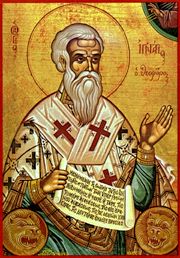
Icon – Ignatius of Antioch (d. 98/117)
Another ancient witness to the Wednesday-Friday fast is Ignatius of Antioch (d. 108), the third bishop of Antioch. In his Letter to the Philippians chapter 13, he urged them to keep the Wednesday-Friday fast.
After the week of the passion, do not neglect to fast on the fourth and sixth days, distributing at the same time of thine abundance to the poor. (Letter to the Philippians chapter 13; ANF Vol. 1 p. 119; emphasis added)
Antioch was not some obscure city. It was the Apostle Paul’s home church (See Acts 13:1-3). The historic Patriarchate of Antioch was one of the leading centers of early Christianity and has continued in this role to the present day. The current Patriarch of Antioch, John X, is the 169th successor to the Apostles Peter and Paul. Thus, the Patriarchate of Antioch is one of the strongest living historical links we have to the early Church and to the Apostles. Evidence for this can be found in how a typical parish in the Antiochian Orthodox Archdiocese in North America keeps the Wednesday-Friday fast. See St. Michael Antiochian Orthodox Church’s (Beaumont, TX) website. From Antioch in the first century to Texas in the twenty-first century, one sees a chain of unbroken Christian tradition spanning two millennia within the spiritual discipline of fasting.
Tertullian (c. 155-c. 220), the controversial third-century Latin writer, wrote a short treatise On Fasting in which he attacked the Wednesday-Friday fast. See chapter 2 (ANF Vol. 4 p. 103), chapter 10 (ANF Vol. 4 p. 109), and chapter 14 (ANF Vol. 4 p. 112). Tertullian wrote On Fasting around 208 after he had joined the Montanist sect. In it he attacks the Catholics for what he saw as their innovative approach to fasting and their indulging the flesh. While the Orthodox Church does not consider Tertullian a saint or a Church Father, he does provide insights into the early Church, especially before Constantine made Christianity a licit religion.
Clement of Alexandria (d. between 211 and 216) was a well-known third-century theologian who sought to synthesize Christianity with pagan Greek philosophy. In his Stromata Book 7 chapter 12, mention is made of the Wednesday-Friday fast among Christians. While his allegorical approach is questionable, he stands as an important witness to the Wednesday-Friday fast dating to the late second to the early third century.
Another important source is the Apostolic Constitution (c. 375-380), a manual or compendium of instructions for clergy that dates to the late fourth century. In it, we find why the two days were designated as days of fasting:
But He commanded us to fast on the fourth and sixth days of the week; the former on account of His being betrayed, and the latter on account of His passion. (Apostolic Constitution Book 5 §15; ANF Vol. 7 p. 445; emphasis added)
See also the Apostolic Constitution Book 7 §23, which contains the same instructions for fasting (ANF Vol. 7 p. 469). Although the authorship is unknown, it is believed to have orignated in Syria, perhaps Antioch.
Augustine of Hippo
While the Apostolic Constitution gives insight into the spiritual practices of late fourth century Christianity in the East, Augustine of Hippo (354-430) gives us insight into the spirituality of late fourth century Christianity in the Latin West. In Letter 36, Augustine commended fasting on the fourth and sixth days (Wednesday and Friday) of the week but discouraged fasting on the seventh day.
The reason why the Church prefers to appoint the fourth and sixth days of the week for fasting, is found by considering the gospel narrative. There we find that on the fourth day of the week the Jews took counsel to put the Lord to death. One day having intervened — on the evening of which, at the close, namely, of the day which we call the fifth day of the week, the Lord ate the Passover with His disciples — He was thereafter betrayed on the night which belonged to the sixth day of the week, the day (as is everywhere known) of His passion. (Letter 36; NPNF Vol. 1 p. 267; emphasis added).
He explains that it was on the fourth day of the week (Wednesday) that the Jewish leadership decided to put Christ to death. And that it was on the sixth day of the week (Friday) that Christ was crucified. In present-day Orthodoxy, nearly the same rationale is given except it is taught that we fast on Wednesday in remembrance of Christ’s betrayal by Judas—which agrees with the Apostolic Constitution.
A century later, we find Pope Leo the Great (d. 461) urging his listeners to keep the Wednesday-Friday fast:
On Wednesday and Friday therefore let us fast: and on Saturday let us keep vigil with the most blessed Apostle Peter, who will deign to aid our supplications and fast and alms with his own prayers through our Lord Jesus Christ, who with the Father and the Holy Ghost lives and reigns for ever and ever. Amen. (Sermon 12; NPNF Vol. 12 p. 123; emphasis added)
Pope Leo urged his listeners on numerous other occasions to keep the Wednesday-Friday fast. See Sermon 16 (p. 125), Sermon 19 (p. 127, p. 128), Sermon 75 (p. 191), and Sermon 88 (p. 199). The repeated exhortations point to the importance of the fast to early Christian spirituality.
In Sermon 12, Leo sums up the reasons for fasting.
But there are three things which most belong to religious actions, namely prayer, fasting, and almsgiving, in the exercising of which while every time is accepted, yet that ought to be more zealously observed, which we have received as hallowed by tradition from the apostles: even as this tenth month brings round again to us the opportunity when according to the ancient practice we may give more diligent heed to those three things of which I have spoken. For by prayer we seek to propitiate God, by fasting we extinguish the lusts of the flesh, by alms we redeem our sins: and at the same time God’s image is throughout renewed in us, if we are always ready to praise Him, unfailingly intent on our purification and unceasingly active in cherishing our neighbor. This threefold round of duty, dearly beloved, brings all other virtues into action: it attains to God’s image and likeness and unites us inseparably with the Holy Spirit. (Sermon 12; NPNF Vol. 12 p. 123; emphasis added)
Pope Leo the Great
The rationale Leo presents very much agrees with Orthodoxy. First, Leo claimed that the Wednesday-Friday fast was part of Oral (Unwritten) Tradition going back to the Apostles. Where the Sermon on the Mount was not specific on when to fast, the early Church being guided by Oral Tradition knew on what days to fast. The specificity of the days for fasting based on Oral Tradition challenges Protestantism’s sola scriptura, which at best leaves the question wide open as to when Christians are obliged to fast. Second, Leo points out that fasting plays an important part in our spiritual growth. He lists three benefits: (1) curbing the lusts of the flesh, (2) drawing near to God, and (3) renewing the image of God within us. Third, Leo informs his listeners that fasting will facilitate their praying with Saint Peter. This indicates that the early Christians believed in praying to the saints and assured them that the saints were standing with them in prayer. This contrasts with Protestantism which frowns on praying to the saints. There is no hint in Leo’s explanation of our earning merit towards our salvation. This should allay any concerns Protestant inquirers may have about Orthodoxy espousing works righteousness. Lastly, Pope Leo’s triad of prayer, fasting, and almsgiving is frequently heard in present-day Orthodoxy. This resonance points to Orthodoxy’s living connection with the early Church.
How Protestants Approach Fasting
The Protestant Reformation stemmed from a schism with Roman Catholicism in the 1500s. As a result of this parting of ways, fasting became a forgotten spiritual discipline among Protestants. This neglect can be attributed to sola fide (justification by faith alone), which many Protestants took to mean that fasting is a form of works righteousness. Martin Luther, in reaction to the legalism of medieval Roman Catholicism, stressed that fasting was to be purely voluntary and optional. John Calvin viewed fasting as spiritually beneficial but this practice fell to the wayside in later generations. (See “Fasting in the Bible and Reformed Tradition“) The English Puritans enthusiastically promoted fasting but did it as a form of protest against the Elizabethan church (see Leithart). Despite the near universal disappearance of fasting among Protestants, Protestant scholars knew of the Wednesday-Friday fast. Philip Schaff’s History of the Christian Church Vol. II, p. 379, makes a perfunctory observation that the early Christians observed the Wednesday-Friday fast. Gregory Dix in The Shape of the Liturgy discussed in detail the historical emergence of the Wednesday-Friday fast, the Montanist resistance, and the West’s eventual acceptance of the Wednesday-Friday fast (p. 342). Towards the end of the twentieth century, there emerged retrieval projects aimed at the recovery and reintegration of ancient Christianity with modern-day Protestantism. One such attempt was Robert Webber’s Common Roots (1978), chapter 13 “The Restoration of Historic Spirituality” (pp. 219-240), which called for the restoration of fasting. The Protestant retrieval project continues into the twenty-first century. In 2026, the popular YouTuber Austin Suggs of Gospel Simplicity, known for promoting dialogue between Evangelicals and other faith traditions, uploaded a podcast about the spiritual discipline of fasting. At the 16:31 mark, he notes that the Wednesday-Friday was at one time a normal part of early Christianity then asks why this spiritual practice had all but disappeared. At the conclusion of the podcast, Suggs urges the recovery of fasting within the framework of Western Christianity, Protestantism and Roman Catholicism. It is curious that he says nothing about Eastern Orthodoxy’s history of keeping the Wednesday-Friday fast without break since the early Church.
Signposts to the Ancient Church
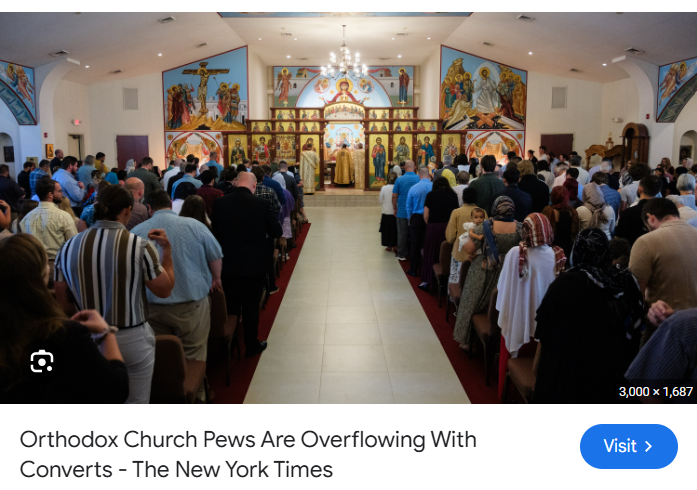
Today growing numbers of the Gen Z cohort—and other generational cohorts—are converting to Orthodoxy. In response, Protestant apologists are urging these seekers to check out historic Protestantism, e.g., Anglicanism or Lutheranism, before choosing to become Orthodox. They point to Protestantism’s “historic” liturgies and tout their “deep” theology compared to the shallowness of low church Evangelicalism. This line of apologetics is problematic. Much of present-day Protestant worship hardly bears any resemblance to the worship practices of the sixteenth century Reformers. Moreover, very few pastors, Protestant and Evangelical, today are acquainted with the basic writings of the Reformation, let alone the Church Fathers. If one is looking for historic Christianity, Protestantism, at best, has a history that only goes back 500 years.
Protestantism and Evangelicalism suffer from a profound disconnect with the early Church. This disconnect can be seen in the areas of worship and doctrine. Unlike Orthodox churches today that use the ancient liturgies of Saint Basil and Saint John Chrysostom that date fourth and fifth centuries, none of today’s Protestant worship can even claim to date back to the Reformation. Likewise, where all Orthodox parishes recite the original Nicene Creed (381) on Sunday, the same cannot be said of Protestant worship. Much of Evangelicalism in their Sunday worship do not recite the Nicene Creed or any creed. Among the more traditional Protestant congregations or Anglican parishes, the form of the Nicene Creed used is a later version with the Filioque—a doctrinal and liturgical innovation that Orthodoxy finds objectionable. Protestantism’s historical disconnect can also be seen in its spirituality. In Protestantism, fasting is not taught as a normative spiritual discipline. (See Jones) Nowhere do Protestant pastors urge their members to keep the Wednesday-Friday fast as did the early Church Fathers. If spirituality is a fundamental component of Christianity, then Protestantism’s failure to observe the Wednesday-Friday fast signals a break from the early Church. Recently, there has been growing interest among Protestants and Evangelicals in recovering a connection with the early Church. While much of the retrieval has been in the areas of doctrine and worship, little attention has been given to spiritual disciplines, specifically the Wednesday-Friday fast.
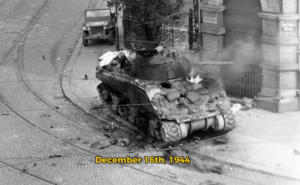
The Wednesday-Friday fast can serve as a useful signpost for those searching for the ancient Church and who are wrestling with competing claims between Protestant and Orthodox apologists. During World War II, the Allies encountered the problem of German infiltrators whose flawless English enabled them to pass through their midst unchecked. It was not until American soldiers began questioning suspect individuals about American sports trivia that they were able to spot the phony Americans. Being American was more than a matter of speaking English but a way of life shared by Americans. Similarly, the Wednesday-Friday fast was known to the early Christians in the West and East and has been a normal part of Orthodoxy for the past two thousand years. The Wednesday-Friday fast may have been part of the history of Roman Catholicism, but it has undergone considerable modification. In present-day Roman Catholicism, only Ash Wednesday and Good Friday are deemed obligatory, with Fridays during Lent considered days of abstinence. While many Orthodox Christians struggle to keep the Wednesday-Friday fast, the fact that the Orthodox Church still teaches the Wednesday-Friday fast is evidence of its continuity with the Ancient Church.
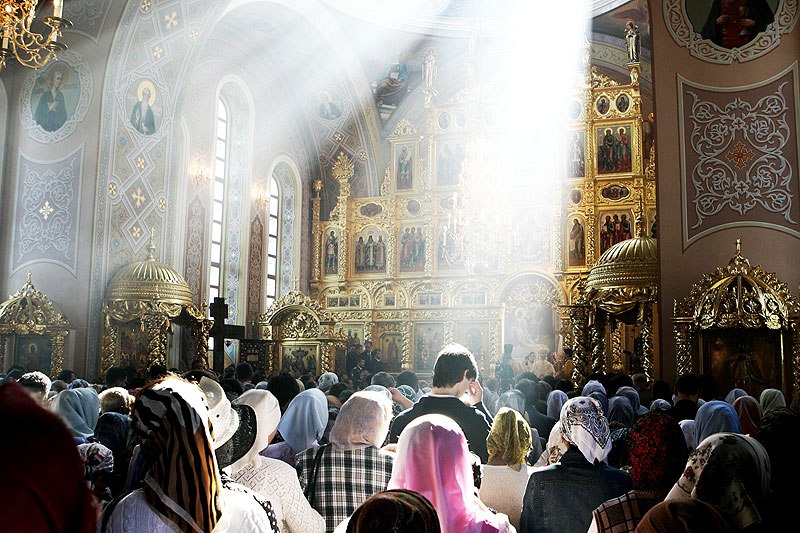
Ancient Worship – Orthodox Liturgy
In closing, while the Wednesday-Friday fast may at first seem to be an oddity, it can serve as a useful signpost for people yearning for the ancient Christian Faith. Much of the Protestant apologia for Protestantism’s antiquity is based on book research. It is one thing for a Protestant apologist to say they are in agreement with a particular doctrine based on their reading of early sources, but can they claim their Sunday services use the same liturgies as the ancient Church or that they fast as did the early Christians? So, while Protestant apologists and pastors can become fluent in the teachings of the early Church Fathers, their spiritual disciplines, especially fasting, will give the game away. Fasting, like a cultural practice, reveals the inner character of the faith tradition. The culture of ancient Christianity lives on in Eastern Orthodoxy. The Wednesday-Friday fast is proof of that. Come and see! Visit an Orthodox church on Sunday morning and witness the ancient Liturgy in action. Then after the Liturgy ask: Do you still keep the Wednesday-Friday fast?
Robert Arakaki
References
Apostolic Constitution Book 5. In Ante-Nicene Fathers Vol. 7.
Apostolic Constitution Book 7. In Ante-Nicene Fathers Vol. 7.
Augustine of Hippo. “Letter 36.” In Nicene and Post-Nicene Fathers Vol. 1 p. 267.
Peter A. Chamberas. 2015. “Not by Bread Alone: Fasting Today in the Orthodox Christian Way.” Greek Orthodox Archdiocese of America.
Clement of Alexandria. Stromata Book 7. In Ante-Nicene Fathers Vol. 2 p. 544.
Didache. Ante-Nicene Fathers Vol. 1.
Greekdoc.com “Didache of the Twelve Apostles.” Greekdoc.com
Gregory Dix. 1945. The Shape of the Liturgy. New York: Seabury Press.
Ignatius of Antioch. “Letter to the Philippians Chapter 13.” In Ante-Nicene Fathers Vol. 1 p. 119.
Ken Jones. 2019. “New Covenant Fasting.” Ligonier.org
Peter Leithart. 2012. “Puritan Fasts.” TheopolisInstitute.com
Leo the Great. In Nicene and Post-Nicene Fathers Vol 12.
St. Michael Antiochian Orthodox Church (Beaumont, TX). 2025. “What are the Wednesday and Friday fasts?”
OrthodoxWiki. “List of Patriarchs of Antioch.”
Gavin Ortlund. 2025. “Why Young Men Are Becoming Eastern Orthodox.” TruthUnites.com
Presbyterian Church (USA). “Fasting in the Bible and Reformed Tradition.”
Philip Schaff. 1885. Ante-Nicene Christianity A.D. 100-325. History of the Christian Church Vol. II. Grand Rapids, Michigan: Wm. B. Eerdmans Publishing Company.
Austin Suggs. 2026. YouTube video: “Why Western Christians Stopped Fasting, and Why We Should Again.” [27:22] Gospel Simplicity.
Tertullian. “On Fasting.” In Ante-Nicene Fathers Vol. 4 pp. 102-114.
Untold War Archives. 2025. YouTube video: “How One Baseball Question Exposed Germany’s Secret Infiltrators Dressed as Gis.” [45:47]
Robert E. Webber. 1978. Common Roots: A Call to Evangelical Maturity. Grand Rapids, Michigan: Zondervan Publishing House.
Orthodoxy, alive today, has 2 major branches, Eastern and Oriental. Optic and Georgian priests are in my circle of friends,though I am Christened 70 years ago in Canda in a United church, raised a Baptist, consciously disciples to Christ at age 15 as a Pentecostal, member of baptistic and Presbyterian fell8wships, always attending Eastern Orthodox with Grandma at Easter, Christmas in her life.
I am His and He is mine.
I met Calgary origin Eastern Ukrainian orthodox priests ,visiting them and other Orthodox in their churches, Egyptian Coptic priests, Armenian priests, Ukrainian Orthodox priests, Georgian priests, Russian priests, and visited the Eastern Orthodox Patriarchate, the Armenian Orthodox Patriarchate in Constantinople ( Istanbul) in my 5 year Protestant work time there, recently.
I love to live and learn Him. I fear God. I gave up fasting when I became chronically ill with illness that made fasting contrary to medical eating/ medication regime. Tech has changed, it seems I am 0hysically free to fast again.
Christ said He will build His church and He does. Sectarianism divides, human pride takes traditions into group justifications of who is in/out of the ” true” church, Scholarly priests tell me truth is objective yet i think how Christ transforms the redeemed in the holy life of sanctication after the new birth justification brings us towards glorification when we see clearly, no longer dimly in a mirror. Humans and church leaders must do as the Apostles urged the new testament church: gaurd against heresy and keep faith , understanding precepts, doctrine, worship and faith all pure.
In every age, location, culture, one must decode the ancient texts of Scripture, know the Author, and recode the Message of the Word to reach the lost we seek to minister to, as He sent us and works with us to accomplish. Yes, logically truth is objective, and He exists.
A lack of humility will signal to me and my group something that is pleasing: we are right, Orthodox, and we can show you where others went/ are wrong. This witness of sectarian pride hurts me. Surely it offends God. Are there not mysteries in Scripture we cannot fully connect in comprehensive systematic or biblical theology? Has the scholars mind no limits or blindspots.
I hate these divisions, the fuels of pride, carnal self righteousness, group think.
Yes, Scripture is His very Word telling us what is, how it came to be, the direction of human life on earth in time and the destiny of all, barring His salvation.
Is not the Gospel God’s help to humans truly helpless to help themselves to deal with the deadly separation the fallen world and human hearts all abide in?
Redemption begins as a miracle. Yet it is completed in the putting off and putting on, line upon line transforming the marred and fallen human into the very likeness of Christ, a unique incommensurate gifted human carrying daily personal cross, drinking Living Water, flowing rivers of life within, eating the Bread of Life and doing the works written for each in His record before the foundation of the world.
Do children learn their family culture? Village culture? Church culture?
Comparing Mediterranean basin people’s, languages, cultures, church traditions, even if rooted in Saviour, one set of Hebrew Scripture, one set of collected Gospels, Epistle, wisdom literature and apocalyptic writings, some how spread. The Gospel and implementation of the Great Commission spread on business paths , through Hebrew festival travel amongst diaspora Jews, to the Mediterranean Basin, the middle east, Persia, India, African Egypt and Ethiopia, China and Central Asian karvansarays, through history place and time.
Yes, John Chrystosom was eise, marvelous and spoke in churches, at places in mixed cultural contexts to people. Was the detail of every expression he made also divine, inspired, unalterable, eternal? Your traditions , our traditions , revere things relevant that speak truth into the lives and times of generations, across geography and into many worldviews and histories of suffering and challenge.
Even amongst Orthodox churches, veneration, patron saints of individual churches, unique jumps into the Bosphorous to retrieve a sinking cross annually, these are not universal monolithic truths! Not for universal replication.
Pharisees practiced ritual external acts of a life of worship, practices derived from and expanded upon, with scriptural stories and values as a basis. Somehow the group practices and leadership wisdom of Pharisees, Saducees and Scribes , so full of logic and so connected to cultural traditions of religious understanding. Pharisees lost their way. They became violently defensive during His life, and eventually murderously full of hatred of Him, and later the Apostles, and His church. Pharisees then, and Jewish religion today, are/ were dedicated to preserve traditions, practices and the holding of limited and profoundly superficial understanding of Scripture left them. He said love one another. By this, all men will know you are My disciples, by your love for one another.
Is knowing God inevitably a return to today’s Eastern Orthodox Church, it’s practices of faith, worship, fasting, prayer, study, obedience in life and acceptance as authority this churches tradition as authority , together with Scripture, for the life of Redemtion and Restoration, God’s help to sinners who cannot help themselves???
Dear “bgmelnyk”,
Thank you for sharing your thoughts and your spiritual journey. Your parting question whether knowledge of God means embracing Eastern Orthodoxy is the key question that we should all be asking. After years of being a Protestant Evangelical, studying church history at seminary, and doing doctoral studies in comparative religions, I have come to conclude that the Eastern Orthodox Church is the Church that Christ founded in Matthew 16:18, which would be the rock that withstands the gates of Hell.
Robert